
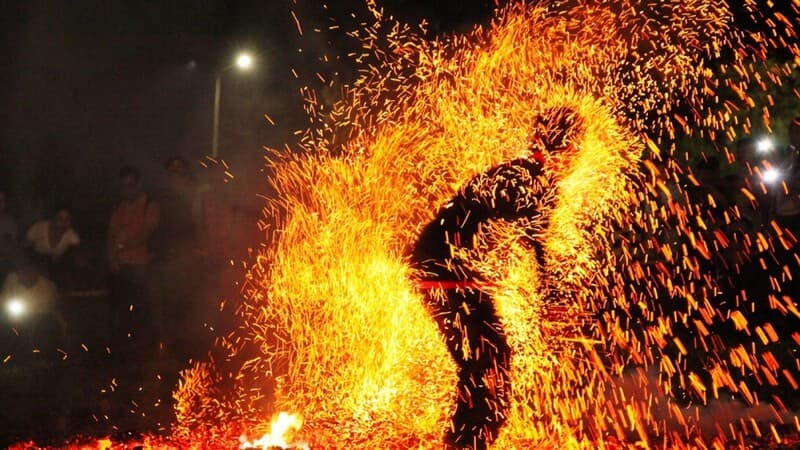
Have you ever imagined barefoot men stepping directly onto burning embers without showing a single sign of pain? That mesmerizing image defines the Pa Then Fire Dancing Festival, one of the most mysterious and spiritually powerful rituals in Vietnam. This is not merely a festival to watch; it is a sacred gateway into the profound belief system of the Pa Then people. Join Mikey Ha Giang as we uncover the meaning, history, and unforgettable atmosphere behind this extraordinary fire ritual.
The Pa Then Fire Dancing Festival is not entertainment staged for visitors. For the Pa Then ethnic community, it represents one of the most sacred ceremonies of the year, deeply tied to spiritual gratitude and communal identity.
According to Pa Then belief, the world is governed by spiritual forces, with the Fire God holding a central role. Fire symbolizes warmth, protection, purification, and life itself. It shields villagers from wild animals, illness, and negative spirits. At the end of the lunar year, the community organizes this ritual to express gratitude for harvest blessings, favorable weather, and protection throughout the past year.
Beyond thanksgiving, the ceremony carries another powerful purpose. It serves as a spiritual cleansing before the new year begins. The sacred flames are believed to remove bad luck, illness, and misfortune while bringing strength and vitality. For young Pa Then men, participating in the ritual is also a rite of courage and maturity. By stepping into the fire, they demonstrate bravery, discipline, and spiritual connection in front of the entire village.
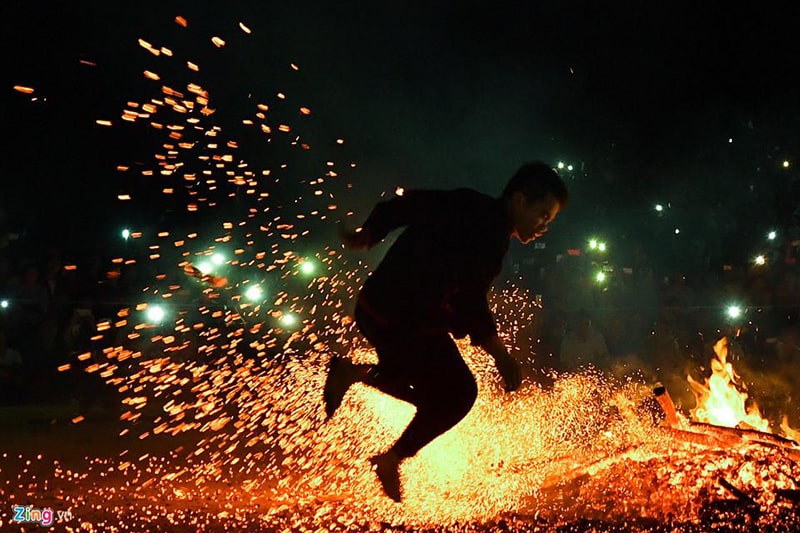
Where Does the Pa Then Fire Dancing Festival Come From?
Witnessing the Pa Then Fire Dancing Festival is like entering a different dimension. The ceremony unfolds at night, surrounded by darkness and silence, which intensifies the sacred atmosphere. Every stage follows precise tradition under the guidance of a respected shaman.
The ritual begins after sunset. The shaman, known as the spiritual bridge between humans and the divine, prepares a simple altar. Offerings often include chicken, rice wine, and symbolic paper items presented to ancestral spirits.
A large fire is built in the center of the yard. It burns steadily for hours until it transforms into a glowing carpet of red embers. The atmosphere gradually shifts from casual gathering to spiritual solemnity.
The shaman then chants ancient invocations while playing traditional instruments such as the Pàn dơ lute and shaking the Tăng bu rattle. These rhythmic sounds call the Fire God and protective spirits to descend. This stage reflects the deep spiritual traditions found in many shaman ceremonies in Vietnam, yet the Pa Then ritual remains uniquely intense and dramatic.
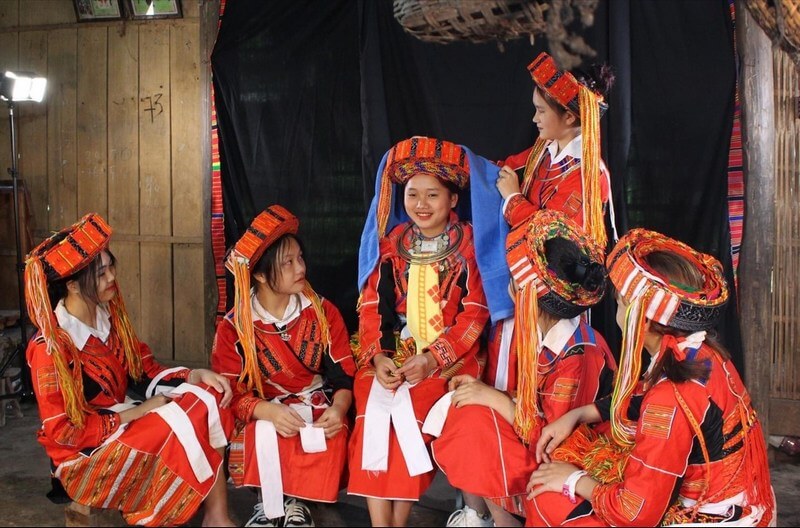
The vibrant colors of traditional Pa Then women's clothing.
As the chanting intensifies, young Pa Then men sit surrounding the shaman. Gradually, their bodies begin to tremble. Their breathing changes. Their expressions shift into trance-like states.
Villagers believe that at this moment, divine spirits enter the dancers’ bodies, granting them supernatural strength and protection. The possession is not theatrical but deeply respected within the community. It represents a sacred union between human courage and spiritual energy.
The entire village observes in silence. The air feels charged with anticipation.
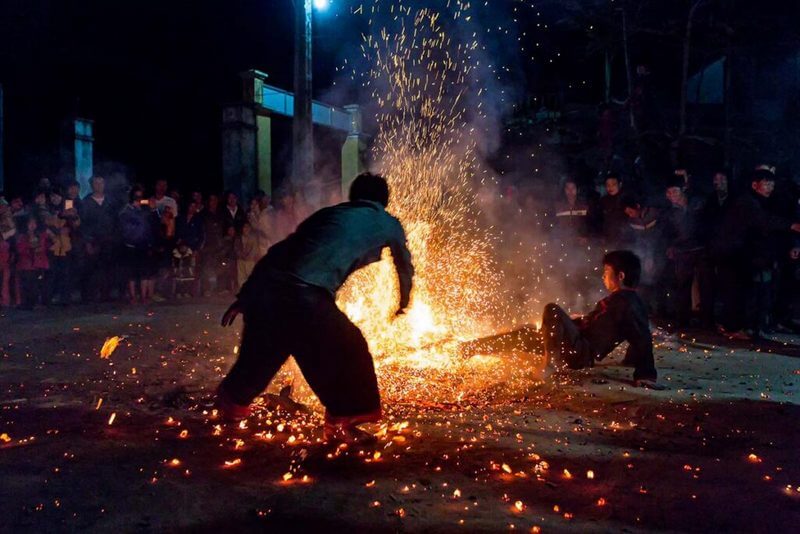
The Moment of Spiritual Possession
If you are passionate about cultural exploration and wish to witness this rare ceremony firsthand, preparation is essential. This event stands among the most unique cultural experiences in Ha Giang, but it requires respect and awareness.
The Pa Then Fire Dancing Festival typically occurs after the harvest season, from the tenth lunar month through the first lunar month of the following year. Exact dates vary because village elders and shamans determine the timing according to spiritual calendars.
You can find Pa Then communities primarily in Quang Binh District of Ha Giang Province and in Lam Binh or Chiem Hoa districts of Tuyen Quang Province. Including this ritual in a Ha Giang fire festival journey adds extraordinary depth to your travel experience.
Best Time and Location to Attend Pa Then Fire Dancing Festival
Since this is a sacred spiritual ceremony rather than a tourist performance, respect is crucial.
Approaching the ceremony with humility allows you to truly appreciate its spiritual meaning.
The Pa Then Fire Dancing Festival is not merely a demonstration of bravery. It represents living evidence of the spiritual richness of Vietnam’s ethnic minority cultures. The ritual reveals how belief systems, ancestral gratitude, and communal identity intertwine within everyday life.
Witnessing this fire dance transforms your understanding of Ha Giang. The mountains are not only scenic landscapes; they are guardians of traditions that continue to thrive through faith and unity.
Seeing barefoot men dance across burning embers is unforgettable. Understanding why they do it is even more powerful.
The Pa Then Fire Dancing Festival is a sacred ritual that reflects the courage and spiritual beliefs of the Pa Then community in Ha Giang. Watching dancers step barefoot onto glowing embers is not just visually striking, but a powerful symbol of protection, strength, and ancestral connection deeply rooted in local tradition.
Because the festival follows a spiritual calendar and takes place in remote villages, timing and access can be challenging without local guidance. With Mikey Ha Giang, you can experience the Pa Then Fire Dancing Festival safely and respectfully, guided by locals who understand the culture and ensure you witness this rare event at the right place and time.