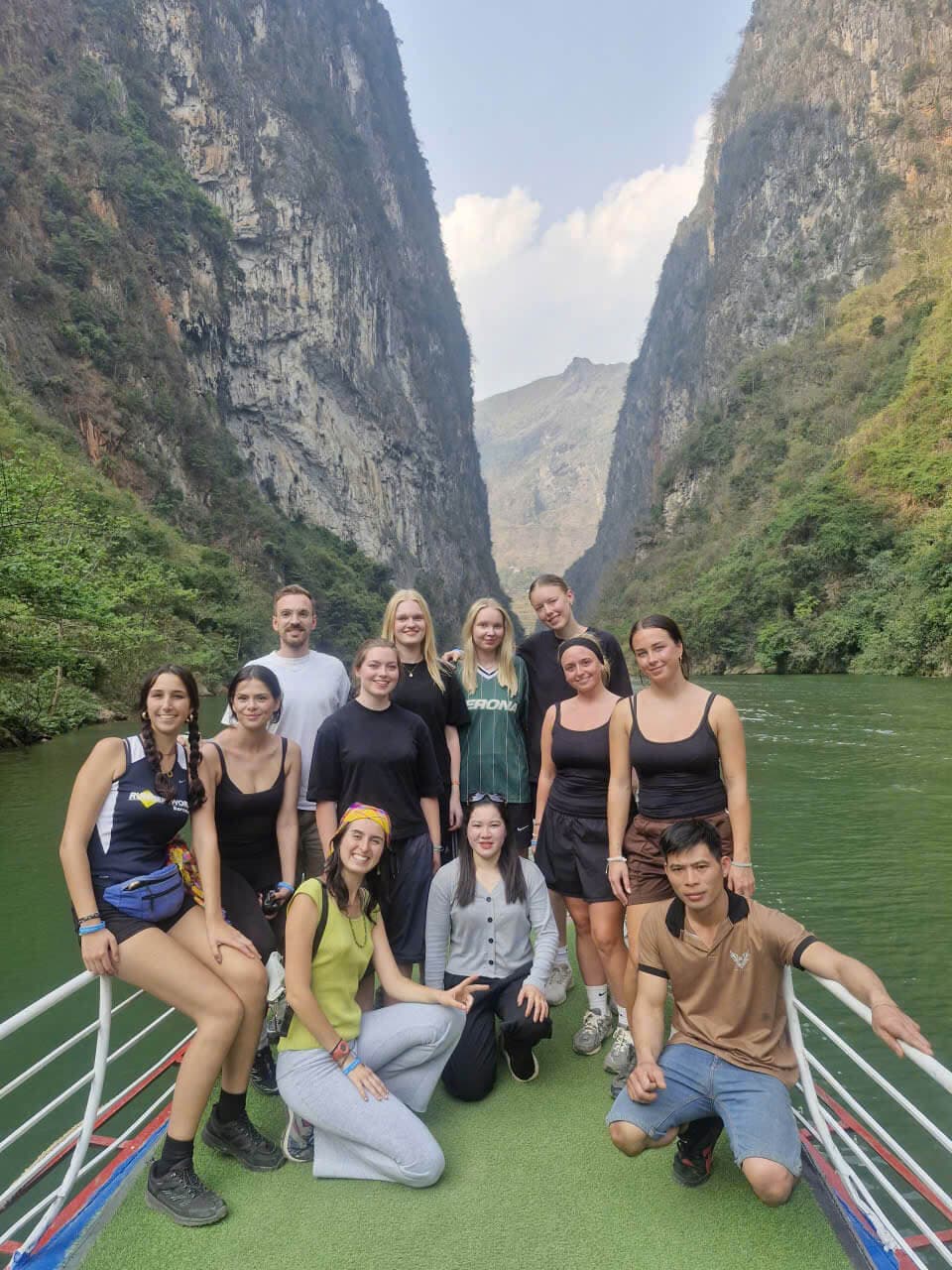
Tucked beneath the legendary Ma Pi Leng Pass, Little Ma Pi Leng Canyon is one of Ha Giang’s most breathtaking yet lesser-known spots. While most travelers admire the view from above, only a few venture down to witness the canyon up close -= where towering cliffs meet the emerald waters of the Nho Que River. This hidden corner offers a completely different perspective, turning a famous viewpoint into a truly immersive experience.
Many travelers planning a trip to Ha Giang often hear the name Little Ma Pi Leng Canyon and feel curious. In fact, this is an affectionate name given by international visitors to Tu San Canyon - a natural masterpiece carved along the Nho Que River. Let’s explore what makes this place so special.
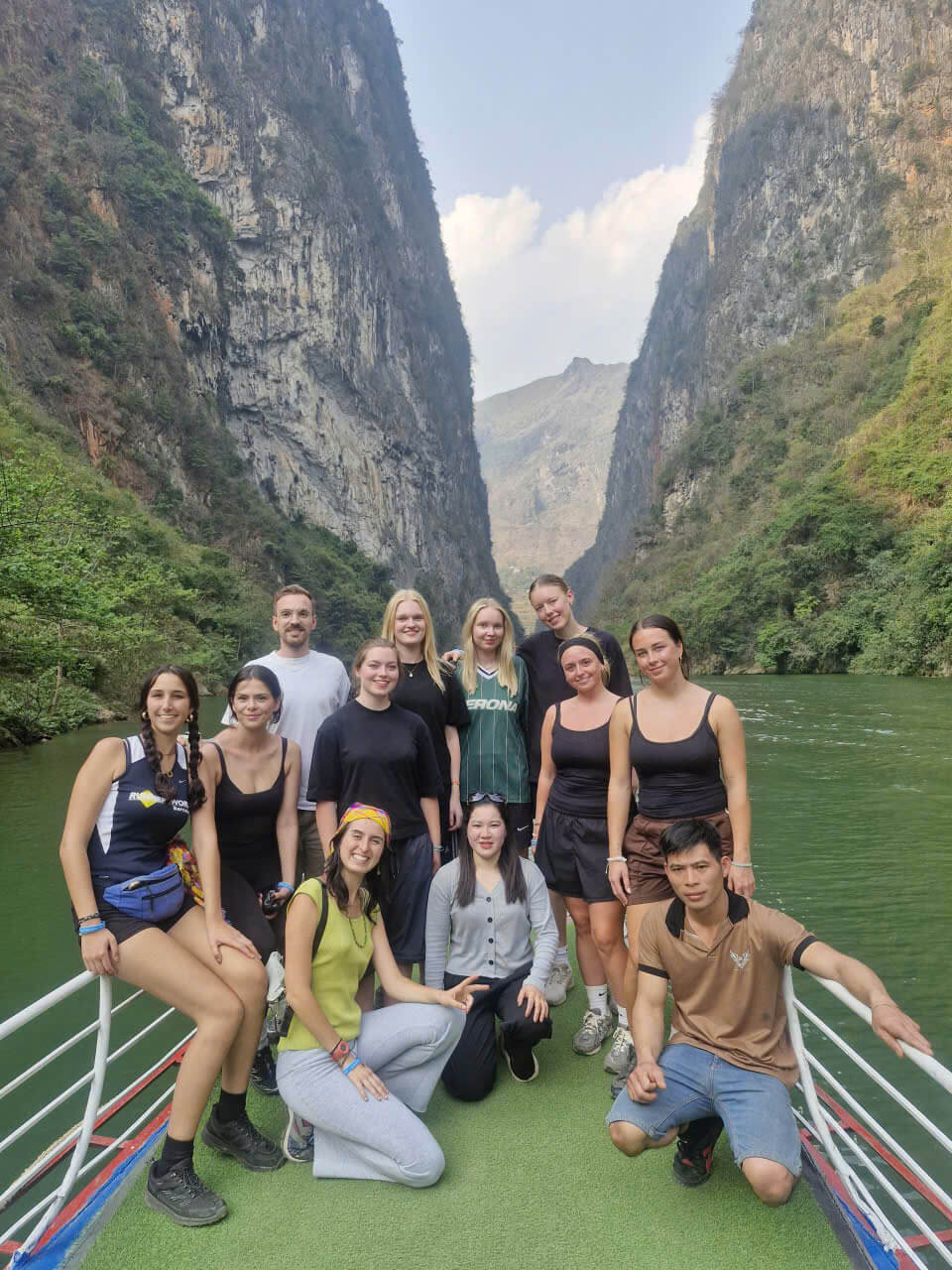
If Ma Pi Leng Pass represents a dramatic, breathtaking road from above - where you can overlook the vast landscape -then Tu San Canyon offers the opposite perspective.
It can be seen as an “inverted version” of the legendary pass. Instead of traveling on a mountain road, you glide along the water.
Exploring Little Ma Pi Leng Canyon is essentially a journey beneath towering limestone cliffs. Being surrounded by such massive formations and looking up at vertical rock walls is just as overwhelming as standing on top of the pass looking down.
This fascinating contrast is exactly why the name Little Ma Pi Leng Canyon was born - a metaphor for another majestic “pass,” but located beneath the water’s surface
Tu San Canyon lies within the territory of Pai Lung, Pa Vi, and Xin Cai communes in Meo Vac District, Ha Giang Province.
With cliffs rising up to 800 meters, a length of 1.7 km, and a depth reaching nearly 1 km, it is recognized as the deepest canyon in Southeast Asia.
This natural wonder is the result of millions of years of geological formation, as the Nho Que River gradually eroded through the Dong Van Karst Plateau, creating a one-of-a-kind masterpiece.
Reaching the boat station to begin your journey into Tu San Canyon requires some planning. The route is not long, but it is steep and challenging. Don’t worry - here’s everything you need to know.
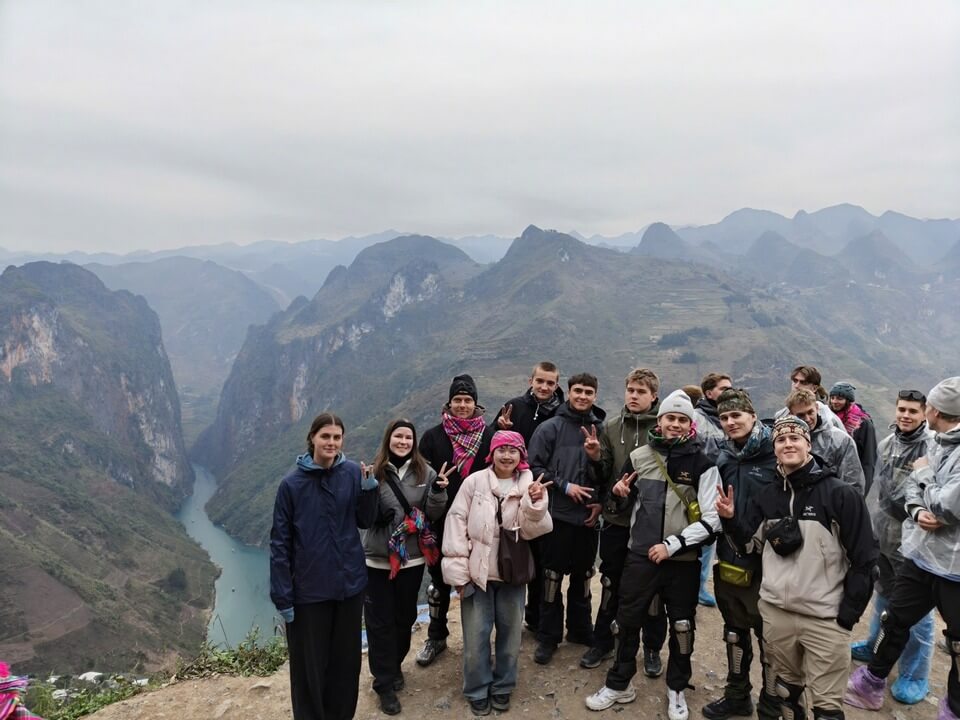
The Nho Que River boat station is located right at the base of Ma Pi Leng Pass, within Meo Vac District.
From the top of the pass, you can easily spot the winding emerald river below. The road leading down to the boat station is narrow, steep, and filled with sharp switchbacks - making it an adventure in itself.
To reach the boat station, you will need to descend a steep road of about 8 km from the main highway. It’s a challenging route but absolutely worth it.
There are two main ways to access the station:
Option 1: Ride a motorbike from Meo Vac toward Dong Van. After passing the Ma Pi Leng Youth Volunteer Monument, you will see a small road on the left leading down to the boat station.
Option 2: From Meo Vac town, follow the road to Pa Vi Cultural Tourism Village. From there, another route leads down to the station.
Both routes are steep and winding, so extreme caution is required..
This is a common concern for many travelers. Each option has its pros and cons:
Riding yourself: Only recommended for experienced riders using manual motorbikes. The steep descent and constant braking can be dangerous.
Motorbike taxi: The safest and most recommended option. Local drivers are familiar with the terrain and can take you safely. The cost is around 150,000 VND/person (round trip).
Walking: Suitable if you have good physical condition and time. It allows more opportunities for photos, but climbing back up can be exhausting.
The main highlight of Little Ma Pi Leng Canyon is taking a boat ride on the Nho Que River. The jade-colored water, quiet atmosphere, and towering cliffs create a truly unforgettable experience.
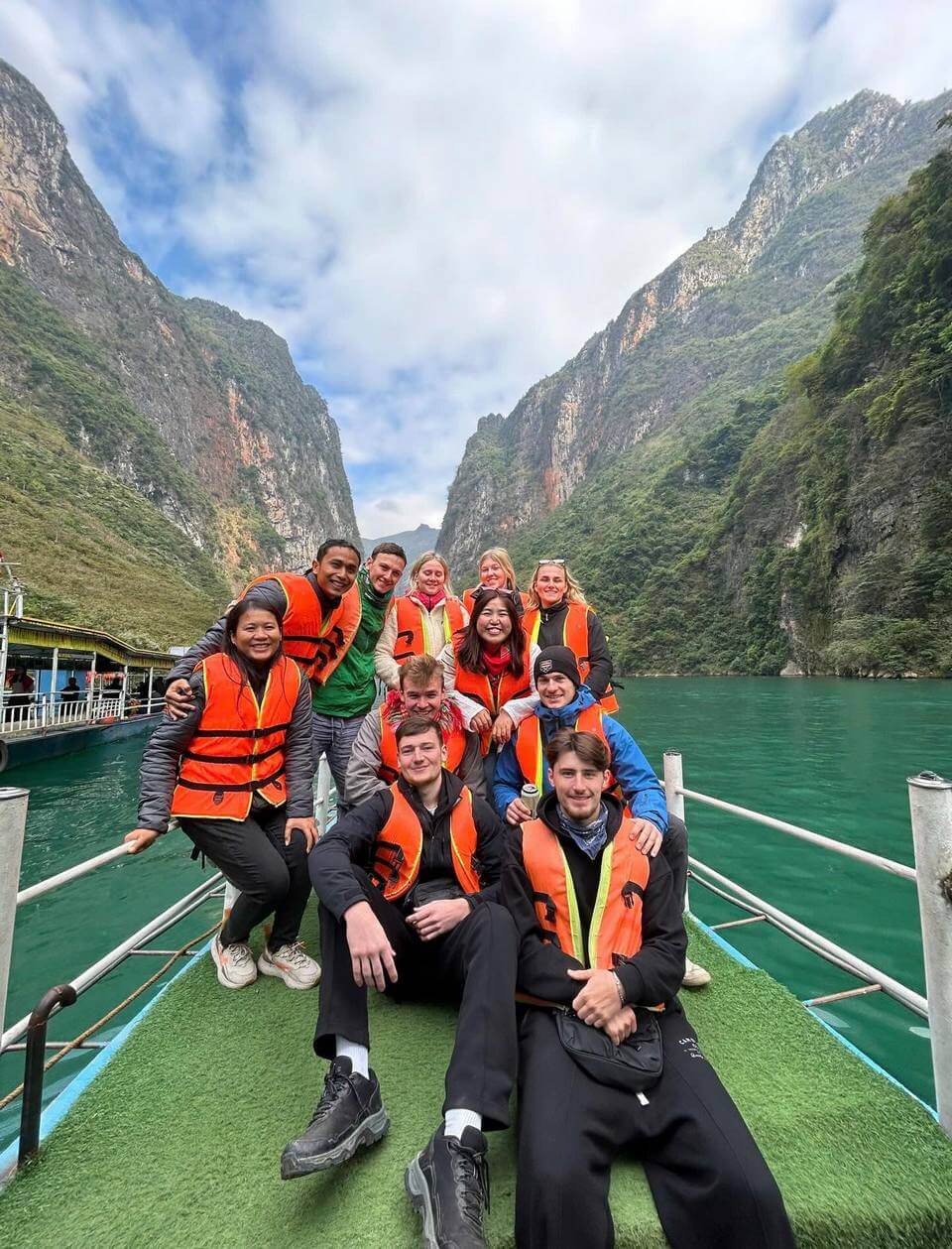
Prices may vary slightly depending on the season, but generally remain stable.
|
Service |
Estimated Cost (VND/person) |
|
Shared motorboat |
120,000 – 150,000 |
|
Kayak rental |
100,000 – 120,000 |
Note: Life jackets are usually included. Most payments are in cash, so be prepared.
A typical boat trip through Little Ma Pi Leng Canyon lasts about 45–60 minutes, but the experience feels far more memorable than the duration suggests. As you move deeper into the canyon, the landscape shifts from open river views to a more enclosed space, where steep limestone cliffs rise on both sides, creating a dramatic and quiet atmosphere. Boats often slow down at the most scenic spots, giving you time to take photos, enjoy the surroundings, and fully take in the scale of the canyon. If you choose kayaking, the experience becomes more flexible and immersive, though it requires more time and physical effort.
Choosing how to explore Little Ma Pi Leng Canyon depends on your travel style and experience. Traveling independently gives you more freedom, but also requires careful planning and confidence navigating mountain roads. On the other hand, joining a guided tour offers a smoother and safer experience, especially for first-time visitors.
Independent travel: Flexible schedule, lower cost, but requires self-navigation and planning
Guided tour: More convenient, safer, includes transport and tickets, often with local insights
Best for beginners: Tour option is more suitable
Best for experienced travelers: Independent travel offers more control
In most cases, a guided experience helps you focus more on enjoying the journey rather than worrying about logistics.
Timing plays a crucial role in shaping your experience at Little Ma Pi Leng Canyon. The same place can feel completely different depending on the season and time of day.
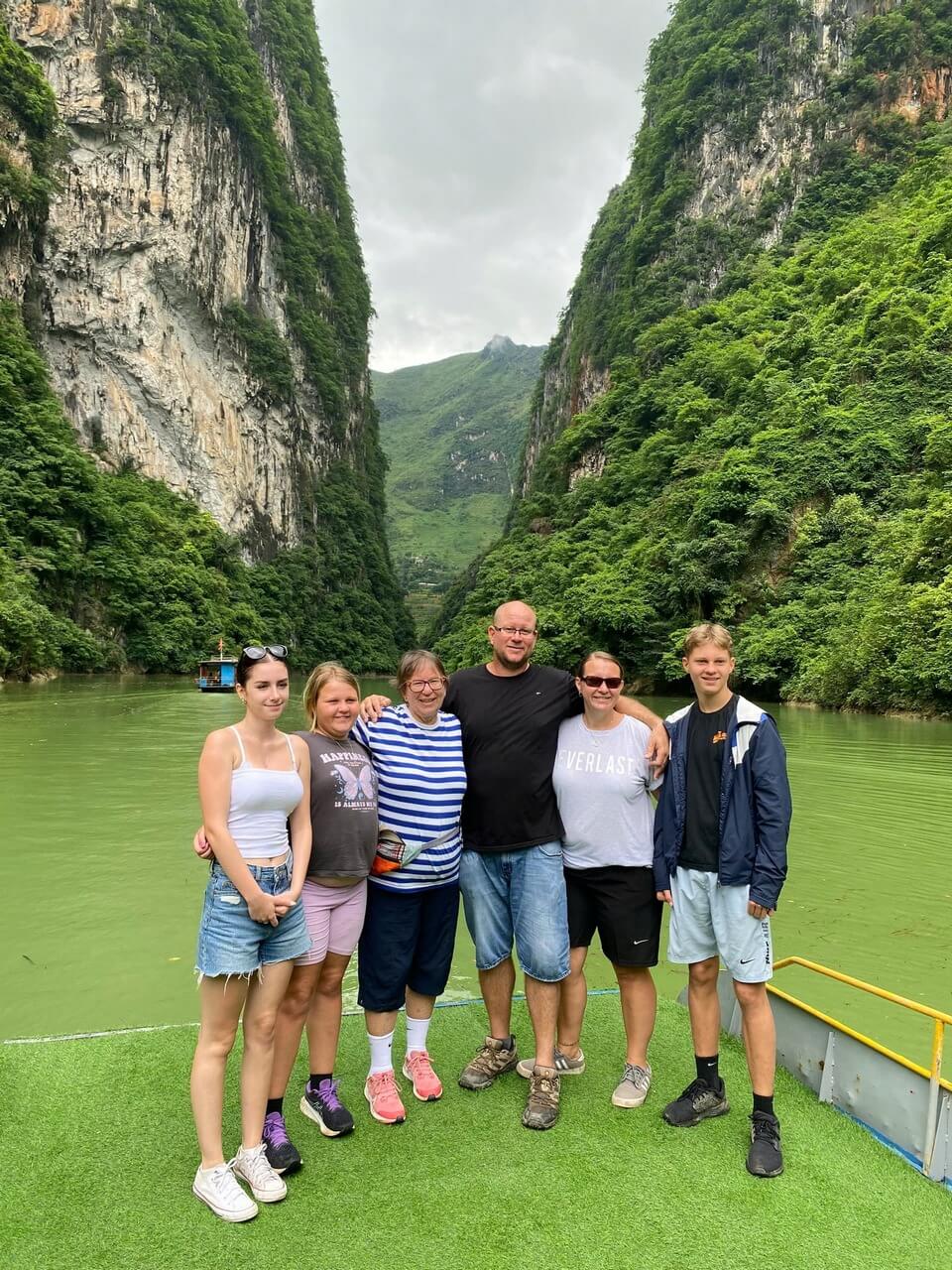
The best time to explore Tu San Canyon is during the dry season, from October to April.
During this period, the weather is more stable, with clear skies and minimal rainfall. This creates ideal conditions for both traveling and sightseeing. Most importantly, the water of the Nho Que River appears at its most iconic color - a deep, emerald green that contrasts beautifully with the gray limestone cliffs.
Between October and November, the region enters the buckwheat flower season. Hillsides across Ha Giang are covered in soft pink and purple blossoms, adding a romantic layer to the already dramatic landscape. Combining this with a visit to the canyon creates a more complete and visually rich journey.
From December to February, the weather becomes cooler, sometimes misty, which gives the canyon a more mysterious and quiet atmosphere. While visibility may occasionally be reduced, the experience feels more intimate and less crowded.
The rainy season (June to August) is generally less recommended. Although the river may be fuller, heavy rain can affect road conditions, especially the steep descent to the boat station, making the journey more challenging.
Lighting conditions in the canyon change significantly throughout the day, directly affecting both the atmosphere and the quality of your photos.
Early morning (7:00 – 9:00) offers a soft, diffused light.
At this time, the air is fresh, the river surface is calm, and the area is still relatively quiet. Sunlight enters the canyon at an angle, creating gentle highlights and shadows along the cliffs. This is ideal for capturing a more peaceful and natural mood.
Midday (11:00 – 13:00), while brighter and sometimes hotter, reveals the most vibrant colors.
The sun shines almost directly overhead, illuminating the river fully and making its emerald color appear more intense and transparent. Photos taken at this time often have stronger contrast and more dramatic visual impact.
Each time of day offers a different perspective.
Choosing between them depends on whether you prefer a calm atmosphere or bold, vivid imagery.
The answer is undeniably yes.
If Ma Pi Leng Pass represents the most iconic viewpoint of the Ha Giang Loop, then Little Ma Pi Leng Canyon (Tu San Canyon) is what completes the experience.
Most travelers first encounter the Nho Que River from above, standing at viewpoints along Ma Pi Leng Pass. From that height, the river appears as a thin, winding ribbon cutting through the mountains.
But it is only when you descend into the canyon and travel along the river that you truly understand its scale.
From below, everything changes. The cliffs feel taller, the space feels narrower, and the connection between water and rock becomes more immediate. The experience shifts from observation to immersion.
This contrast - seeing the same landscape from two completely different perspectives - is what makes the Ha Giang Loop unique.
Skipping the river experience would mean missing half of the story.
After completing your visit to Little Ma Pi Leng Canyon, there are several nearby destinations that naturally complement your journey.
Ma Pi Leng Pass viewpoints remain essential stops.
Returning to the top after visiting the canyon gives you a new perspective—you now understand what lies beneath the view.
Pa Vi Cultural Tourism Village offers a chance to slow down.
With well-organized homestays and traditional architecture, it provides insight into local culture and a comfortable place to rest.
Meo Vac town, especially on Sundays, comes alive with its ethnic market.
This is where different communities gather, creating a vibrant mix of colors, sounds, and traditions.
Combining these stops turns a single destination visit into a more complete travel experience.
Để chuyến đi của bạn thêm phần suôn sẻ, chúng tôi đã tổng hợp một vài câu hỏi thường gặp và giải đáp ngắn gọn. Hy vọng phần này sẽ hữu ích cho bạn.
Although the boat trip itself is relatively short, proper preparation will make your experience much more comfortable.
Sun protection: Sunscreen, hats, and sunglasses are essential, especially during midday
Hydration: Bring water, as the journey to the boat station can be physically demanding
Snacks: Useful for maintaining energy, particularly if you plan multiple stops
Camera or phone: Fully charged, as this is one of the most photogenic locations in Ha Giang
Cash: Most services in the area do not accept digital payments
Being prepared allows you to focus entirely on enjoying the experience.
Yes, the boat ride on the Nho Que River is generally very safe.
Local operators are experienced and familiar with the river conditions. Life jackets are provided for all passengers, and the river itself is relatively calm, without strong currents or dangerous rapids.
In fact, the more challenging part of the journey is often the road leading down to the boat station. That is why many travelers prefer hiring local motorbike drivers for this section
Visiting Little Ma Pi Leng Canyon is usually part of Day 2 or Day 3 of the Ha Giang Loop itinerary. It fits naturally between other major highlights.
You can combine it with:
Lung Cu Flag Tower (the northernmost point of Vietnam)
Dong Van Old Quarter (a historic and cultural stop)
Continuing your journey toward Du Gia village, known for its peaceful landscapes and waterfalls
This flexibility allows you to build a well-rounded itinerary without feeling rushed.
Standing inside Little Ma Pi Leng Canyon, you begin to understand why Ha Giang is often described as one of the most dramatic landscapes in Vietnam. The scale of the cliffs, the stillness of the river, and the raw beauty surrounding you create a feeling that photos alone can never fully capture.
But reaching this hidden place - and truly experiencing it - requires more than just following a map.
With Mikey Ha Giang, you are guided beyond the usual viewpoints into places that many travelers miss. From navigating the route safely to sharing local insights, every part of the journey is designed to help you connect more deeply with the landscape.
If you’re looking for more than just a quick stop, but a real experience inside the mountains, Little Ma Pi Leng Canyon might just be the highlight of your Ha Giang adventure.