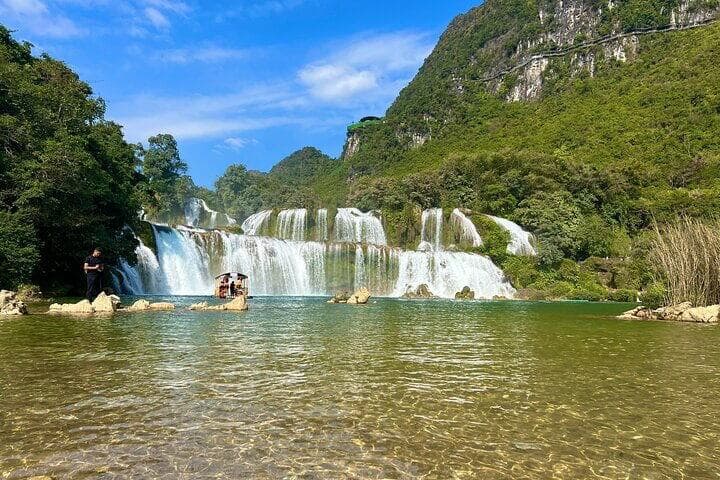
Stretching from the rugged peaks of Ha Giang to the majestic Ban Gioc Waterfall near the Chinese border, this route is one of Northern Vietnam’s most captivating yet underrated journeys. It’s not a straight line on the map, but a winding passage through limestone mountains, quiet villages, and untouched landscapes where time seems to slow down. For travelers seeking something beyond the typical loop, the journey from Ha Giang to Ban Gioc Waterfall offers a rare chance to experience Vietnam in its most raw and authentic form.
Many travelers planning their first trip to Northern Vietnam often ask the same question: Can you travel from Ha Giang to Ban Gioc Waterfall in one day?
The honest answer is no — and more importantly, you shouldn’t try to.
The journey from Ha Giang to Ban Gioc Waterfall is not designed for speed. It’s a route that unfolds slowly, revealing layers of landscapes, cultures, and emotions along the way. Treating it as a quick transfer would mean missing everything that makes this region one of the most unforgettable parts of Vietnam.
This is not just a route. It’s an experience that demands time, patience, and a willingness to slow down.
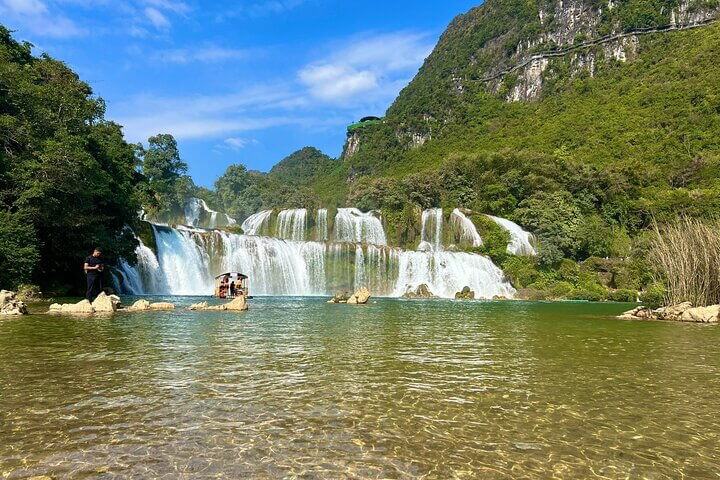
hink of this journey as a long, immersive expedition rather than a simple ride from point A to point B.
As you leave Ha Giang behind, the road begins to twist through towering limestone mountains. Sharp bends lead into deep valleys, while quiet villages appear unexpectedly between cliffs and rice terraces. Every hour brings a different view, a different atmosphere, a different story.
Trying to rush through this in a single day is not only exhausting but also unsafe. Mountain roads in Northern Vietnam require focus, especially on steep passes and narrow sections.
More importantly, rushing strips away the essence of the trip.
Because the real beauty of the Ha Giang to Ban Gioc Waterfall journey lies in the in-between moments - the unexpected stops, the roadside encounters, and the landscapes you never planned for.
On paper, the distance from Ha Giang city to Ban Gioc Waterfall is about 350–400 km.
But distance alone does not tell the full story. This region is dominated by rugged terrain, meaning the roads are rarely straight. Instead, they wind continuously through mountains, with elevation changes and tight corners that naturally slow you down.
Even under good conditions, the average speed is modest. You should expect at least 8–10 hours of riding or driving if you move continuously - without accounting for rest stops, meals, or photography breaks.
And realistically, you will want to stop. Because along this route, stopping is not optional - it’s part of the experience. That’s why dividing the trip into 2 or 3 days is not just a recommendation, but the only way to truly enjoy the journey safely and meaningfully.
There is no single “best” way to travel from Ha Giang to Ban Gioc Waterfall. The right choice depends on how you want to experience the journe - whether you prioritize freedom, comfort, or budget.
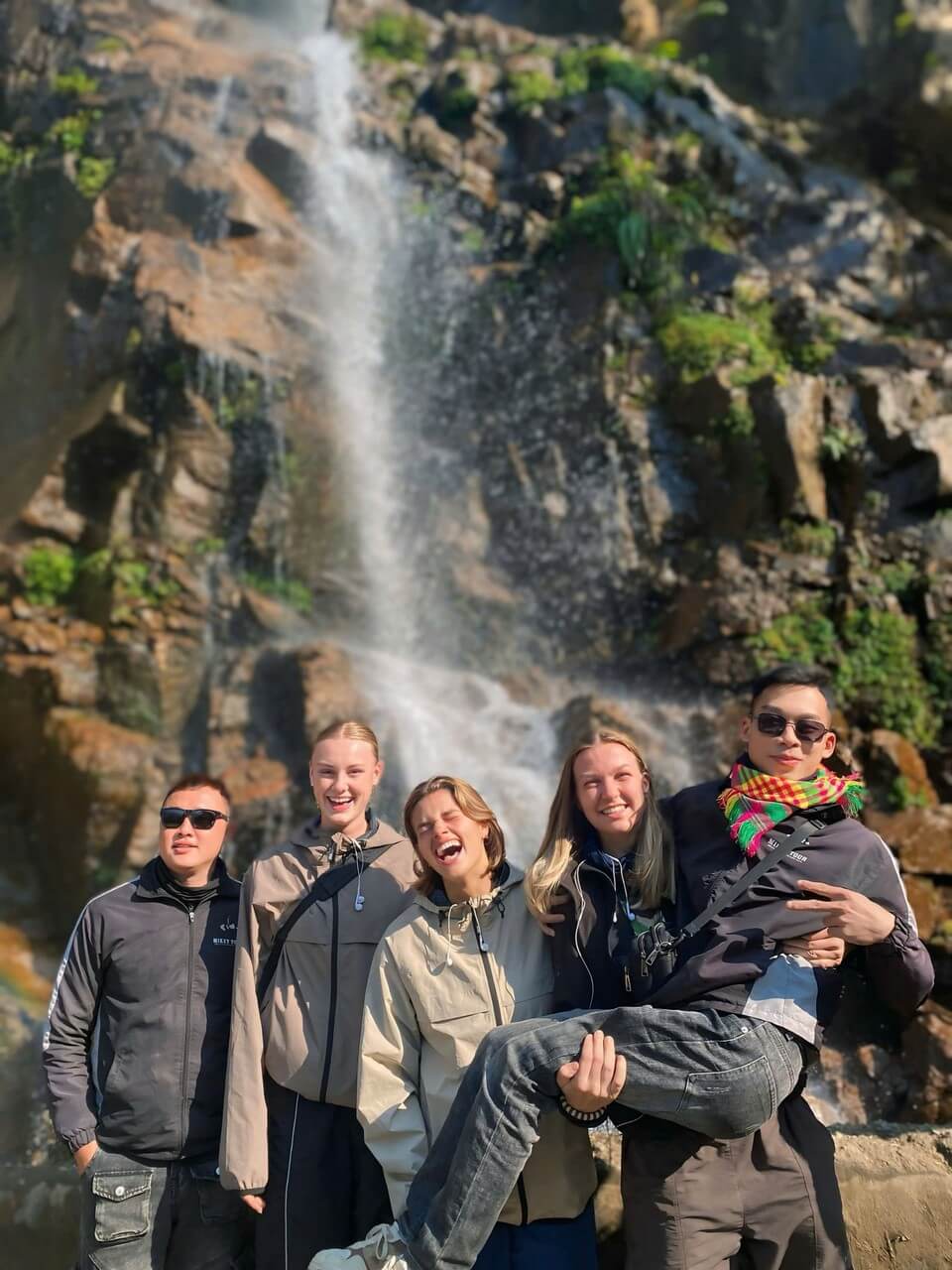
Traveling by motorbike is, without a doubt, the most immersive way to experience this route.
You are not just passing through the landscape - you are part of it. You feel the temperature change as you climb higher, hear the wind rushing through mountain passes, and experience every turn of the road directly.
Riding through iconic routes like Ma Pi Leng Pass is not just about the view - it’s about the sense of achievement. Every curve you navigate becomes part of your story.
Advantages:
Total freedom to explore at your own pace
Deep connection with the surrounding nature
Affordable and popular among experienced travelers
Disadvantages:
Requires confident riding skills
Physically demanding over long distances
Risk increases in poor weather or low visibility
For those who prefer to focus on the scenery rather than the road, traveling by private car or with an Easy Rider offers a more relaxed experience.
Instead of concentrating on navigation and road conditions, you can fully absorb the landscapes - watching mountains roll by, observing daily life in remote villages, and stopping comfortably at scenic viewpoints.
With a local driver, the journey also becomes more insightful. You’re not just traveling - you’re learning about the region through someone who knows it intimately.
Advantages:
Higher level of safety and comfort
Ideal for families, couples, or small groups
Local insights from experienced drivers
Disadvantages:
More expensive than self-riding
Less spontaneous than traveling by motorbike
After exploring different variations, one route stands out for balancing safety, efficiency, and scenic value. This is widely considered the best route from Ha Giang to Ban Gioc Waterfall, especially for first-time travelers.
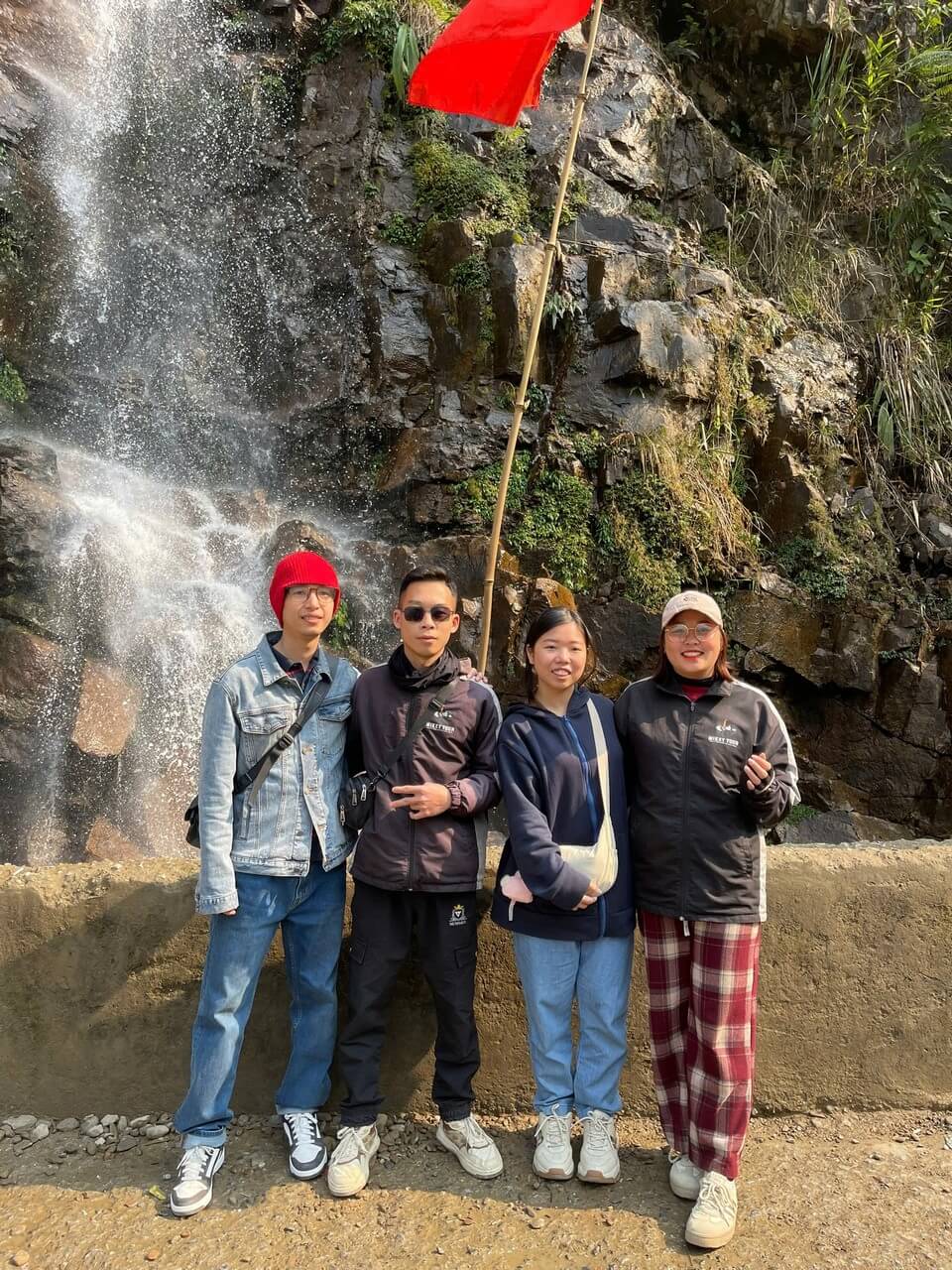
Rather than forcing the journey from Ha Giang to Ban Gioc Waterfall into a single exhausting ride, experienced travelers almost always break it into two stages - not just for safety, but to truly feel the journey.
Road 1: Ha Giang → Cao Bang (250–300 km)
This is where the adventure really begins.
The road gradually pulls you away from the familiar landscapes of Ha Giang and leads you deeper into the remote northeast. You’ll spend hours navigating winding mountain roads, where each turn reveals a new layer of scener - limestone peaks rising sharply from the earth, narrow valleys carved by time, and occasional villages quietly tucked into the hills.
It’s not just physically demanding, but mentally engaging. The road requires your full attention, especially on long stretches with continuous curves and elevation changes.
That’s why dedicating a full day to this section is essential. Arriving in Cao Bang city by late afternoon feels like reaching a natural pause point - a place to rest, recharge, and reflect on everything you’ve already experienced.
And surprisingly, Cao Bang itself is not just a stopover. It has a calm, almost untouched atmosphere, where local life moves at a slower, more grounded pace compared to tourist-heavy destinations.
Stage 2: Cao Bang → Ban Gioc Waterfall (~85 km)
The second stage feels completely different.
After the intensity of the first day, this shorter stretch allows you to slow down and be more present. The road becomes less demanding, the pace more relaxed, and the scenery begins to open up in a softer, more expansive way.
As you get closer to Ban Gioc Waterfall, the landscape subtly changes - lush greenery thickens, rivers appear more frequently, and the sense of proximity to the border adds a unique atmosphere to the journey.
Instead of rushing, you have time to stop, take photos, explore nearby sites, and arrive at the waterfall without exhaustion.
Breaking the journey this way doesn’t just make it easier. It transforms the route from a physically draining ride into a layered travel experience - where each day has its own rhythm and emotional tone.
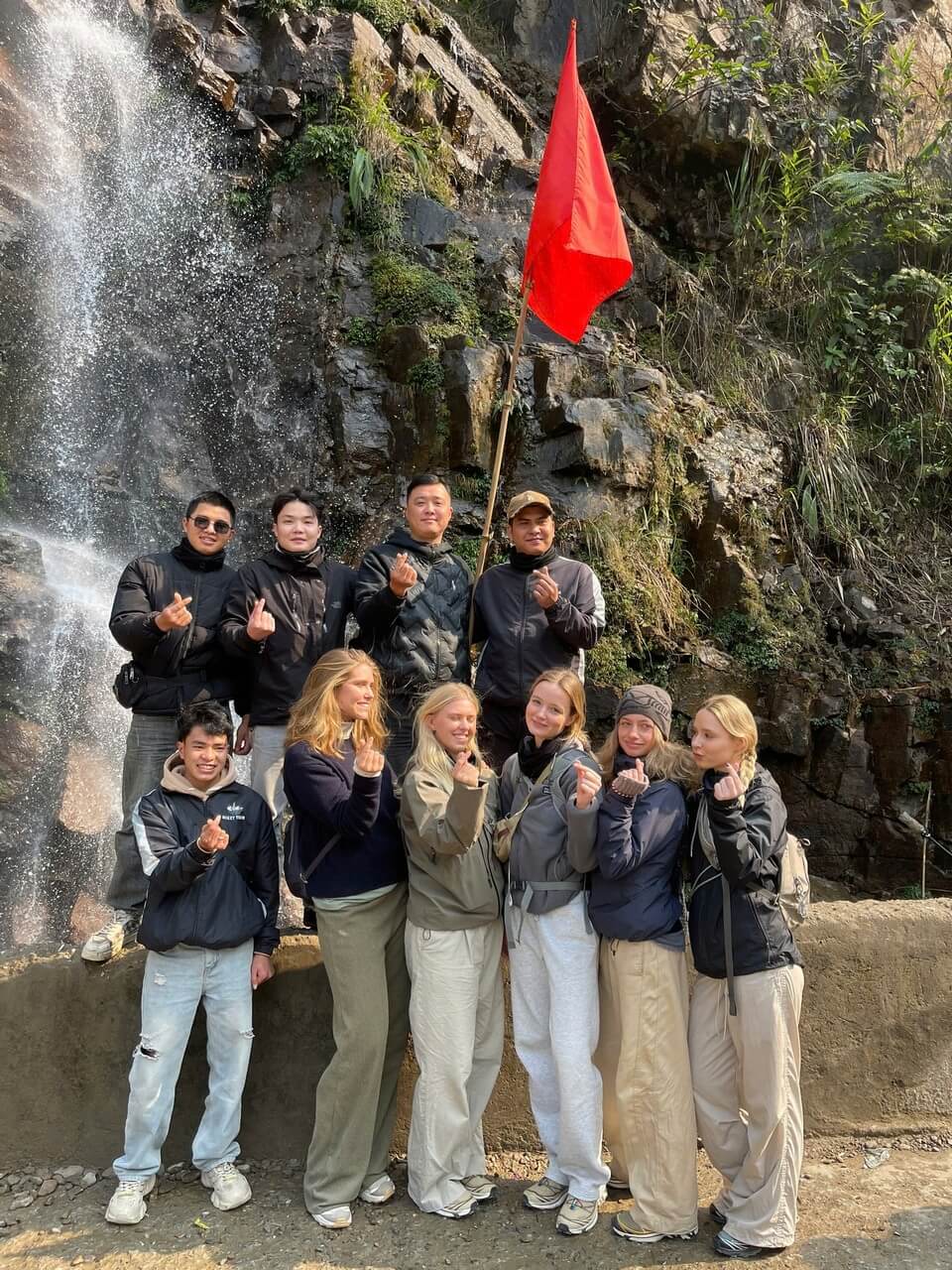
One of the biggest mistakes travelers make is focusing only on Ban Gioc Waterfall.
In reality, the route itself is filled with highlights:
Ma Pi Leng Pass
One of Vietnam’s most iconic mountain passes, offering dramatic views over the Nho Que River far below
Dong Van & Meo Vac
Historic highland towns where you can experience the culture of ethnic minorities, especially the Hmong community
Cao Bang City
A quiet and charming stopover, known for its local cuisine and relaxed atmosphere
Nguom Ngao Cave
A stunning limestone cave near Ban Gioc, filled with impressive natural formations
Each of these stops adds depth to your journey, turning it into a multi-layered experience rather than a single destination trip.
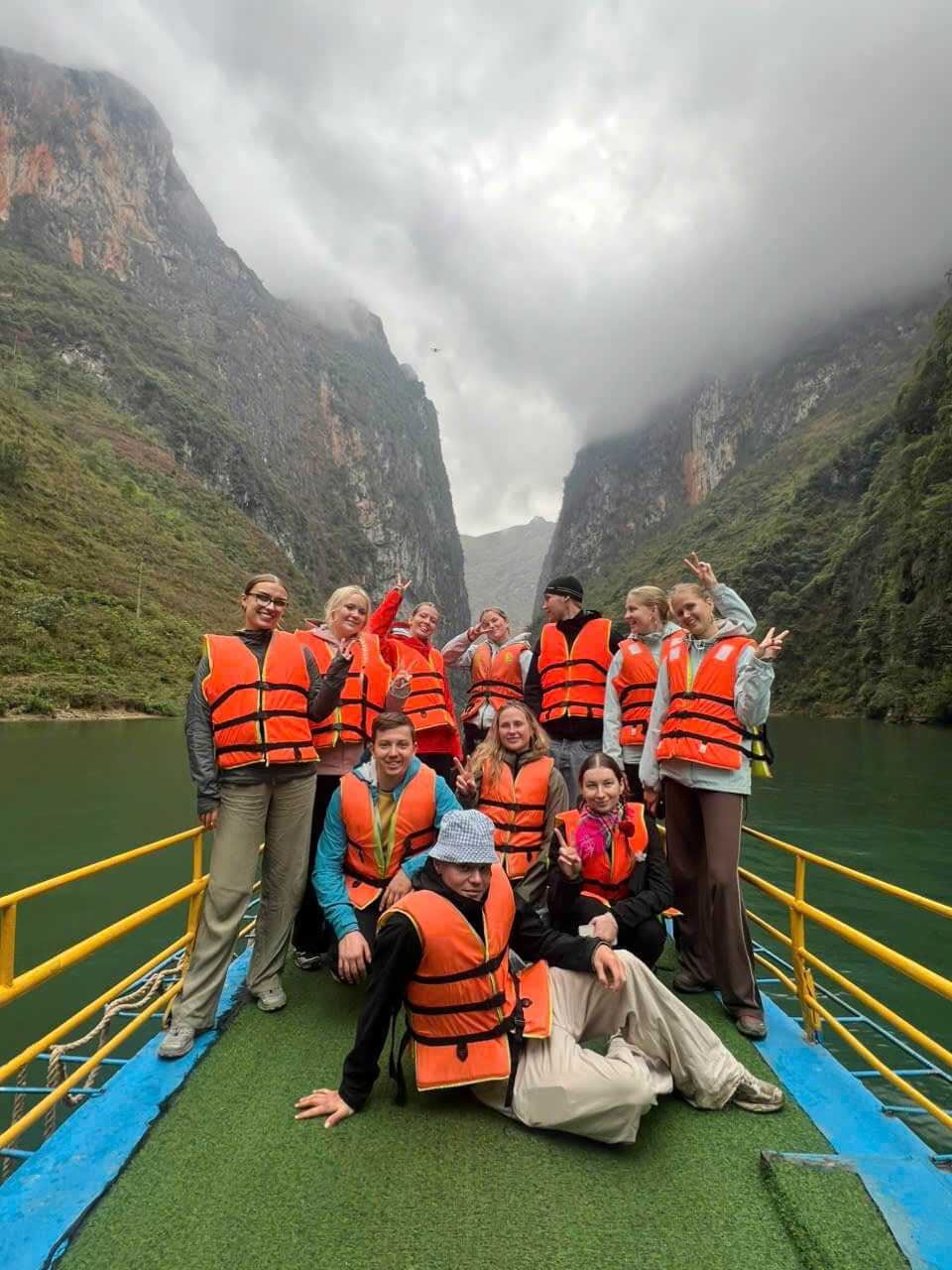
Combining the Ha Giang Loop and Ban Gioc Waterfall is not just efficient - it’s one of the most rewarding ways to experience Northern Vietnam as a whole.
This option is for travelers who want to see as much as possible within a limited timeframe.
Day 1: Ha Giang → Dong Van / Meo Vac (via Ma Pi Leng Pass)
A visually intense day, filled with iconic landscapes and dramatic mountain roads
Day 2: Meo Vac → Bao Lac → Cao Bang
A longer, quieter stretch, transitioning from rugged terrain into calmer regions
Day 3: Cao Bang → Ban Gioc Waterfall → Return to Cao Bang
A focused day to explore the waterfall before heading back
This itinerary works - but it moves fast. You will experience a lot, but with limited time to fully absorb each place.
If you want the journey to feel complete rather than rushed, this is the better option.
Day 1: Ha Giang → Quan Ba → Yen Minh → Dong Van
Day 2: Dong Van → Lung Cu → Ma Pi Leng → Meo Vac
Day 3: Meo Vac → Bao Lac → Cao Bang
Day 4: Cao Bang → Ban Gioc → Nguom Ngao Cave
Day 5: Explore more → Return to Cao Bang
With this pace, the journey becomes more than movement. You have time to stop without pressure, interact with locals, and actually feel the transition between regions.
Based on real travel experience, 4 to 5 days is the sweet spot.
Less than that, and the journey becomes a race. More than that, and you gain space - to explore deeper, rest longer, and appreciate the small details that make this route special.
Because ultimately, the journey from Ha Giang to Ban Gioc Waterfall is not about how far you go. It’s about how much you allow yourself to experience along the way.
For some travelers, the complexity of planning this route can feel overwhelming. And honestly, that’s understandable.
Choosing a Ha Giang to Ban Gioc Waterfall tour removes most of the uncertainty:
You don’t have to think about routes, timing, or logistics
Experienced local guides handle navigation and safety
Accommodation and meals are pre-arranged
You gain deeper cultural insight through guided experiences
Instead of focusing on planning, you can focus entirely on the journey itself.
Not all tours are the same.
To ensure a quality experience, you should look for:
Genuine customer reviews from international travelers
A clearly structured itinerary with no hidden gaps
Reliable, well-maintained vehicles
Transparent inclusions (meals, accommodation, insurance)
Choosing the right operator can make the difference between a stressful trip and a seamless adventure.
Mikey Ha Giang have compiled some of the most common questions about this journey to help you clarify any final concerns.
Motorbikes are the most popular choice among backpackers and international travelers because of the freedom and authentic experience. However, private cars with drivers are becoming more popular due to comfort and safety.
In general, the main roads are well-paved and have improved significantly. However, there are still narrow and winding sections, especially on mountain passes. You should drive carefully, particularly during rainy or foggy conditions
The best time to travel is during the dry season, from September to April.
September - October: golden rice fields
March - April: pleasant spring weather
You should avoid the rainy season (June to August) because the roads can be slippery and there is a risk of landslides.
Not every trip is about ticking destinations off a list. The route from Ha Giang to Ban Gioc Waterfall is something else - a slow unfolding of Northern Vietnam’s raw beauty, where each stretch of road reveals a new story, a new rhythm, a different way of life.
From winding mountain passes in Ha Giang to the powerful cascades of Ban Gioc, this journey connects two of the most remarkable regions in the country. Along the way, you’ll pass through quiet borderlands, meet local communities, and experience landscapes that remain untouched by mass tourism.
With Mikey Ha Giang, this is not just a transfer between places. It’s a carefully crafted route designed for international travelers who want depth, safety, and genuine experiences beyond the usual tourist paths.
If you’re looking for more than a destination, this route might just become the highlight of your Vietnam adventure.