Have you ever wondered what gives soul to the breathtaking mountain passes of Ha Giang? It is not only the majestic landscapes, but also the vivid tapestry of Ha Giang ethnic culture. This region is home to many ethnic minority groups, each carrying its own identity and unique story. Join Mikey Ha Giang as we explore this rich cultural treasure, from colorful traditional costumes to customs that have been preserved for generations.
Ha Giang, the northernmost land of Vietnam, is often known for the majestic Dong Van Karst Plateau or the dramatic Ma Pi Leng Pass. However, its true beauty lies in its profound cultural diversity.
Imagine a mosaic made up of countless colorful pieces—that is exactly what Ha Giang’s culture represents. Each ethnic group, whether the resilient H’Mong living on rocky slopes or the gentle Tay people in lush valleys, contributes its own unique shade. Together, they form a harmonious and deeply captivating cultural picture.
Are you curious about the richness of cultural diversity in Ha Giang? This land is home to more than 17 different ethnic groups.
This impressive number makes Ha Giang one of the most ethnically diverse provinces in Vietnam. Among them, the most prominent and influential groups include the H’Mong, Tay, Dao, Nung, Giay, and Lo Lo communities.
In this guide, we will take you deeper into their lives and explore their most distinctive cultural features.
When mentioning Ha Giang, the image of the H’Mong people often comes first.
They are the majority ethnic group and are considered the “masters” of the rocky plateau.
The lives of the Hmong people in Ha Giang are closely tied to jagged limestone mountains and terraced fields. They are known for their strong spirit, independence, and remarkable ability to adapt to harsh natural conditions.
This deep connection with the land has shaped a culture that is both unique and proud.
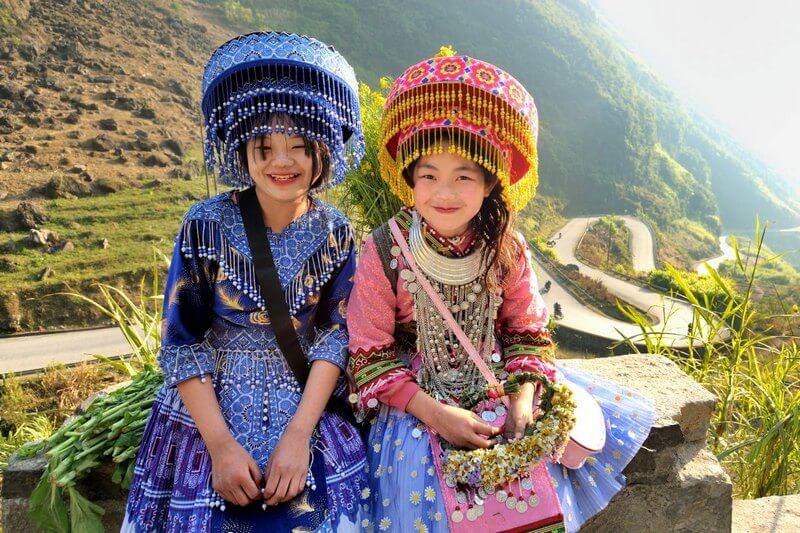
The traditional clothing of the H’Mong is like a moving work of art.
H’Mong women spend months weaving linen, dyeing it with indigo, and hand-embroidering intricate patterns onto their garments. Each outfit is not only vibrant in color but also carries symbolic meanings related to life and the universe.
You will easily recognize their pleated skirts, geometrically patterned jackets, and elaborate silver jewelry. Different H’Mong sub-groups - such as Flower H’Mong, White H’Mong, and Black H’Mong - each have their own variations, creating a remarkably diverse “fashion world.”
To cope with the harsh climate of the plateau - freezing winters and hot summers—the H’Mong developed a unique architectural style: trinh tuong houses.
These houses are made entirely of compacted earth, with thick walls formed by tightly packing soil into wooden molds. The process requires significant strength and patience.
As a result, these homes stay warm in winter and cool in summer, standing firm like small fortresses in the rocky highlands.
The Gau Tao Festival is the most important celebration of the H’Mong people, usually held in spring to give thanks and pray for health, prosperity, and happiness.
It is a time for the entire community to gather, celebrate, and strengthen bonds. Activities include:
Traditional flute dancing and music
Love songs and courtship singing
Folk games such as ball tossing, spinning top contests, and stick pushing
This festival offers a perfect opportunity to witness the richness of H’Mong spiritual life
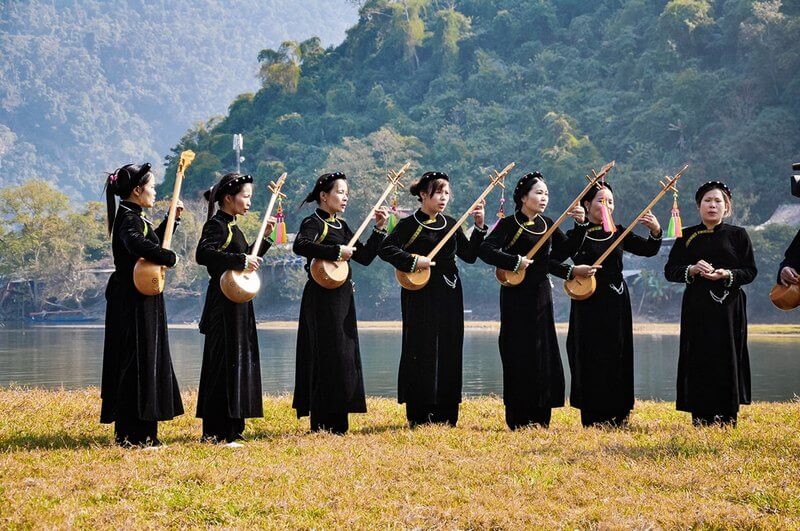
In contrast to the colorful H’Mong clothing, Tay traditional attire reflects simplicity and elegance.
The main color is deep indigo, almost black, dyed naturally from indigo plants. Women typically wear a five-panel dress fastened at the side, a headscarf, and silver jewelry.
The beauty lies not in complex patterns, but in the refined tailoring and natural materials, creating a sense of comfort and harmony.
The Tay people usually settle in fertile valleys near rivers, suitable for wet rice cultivation.
Their typical homes are stilt houses, built on wooden pillars with palm-leaf or tiled roofs. The upper floor is used for living and communal activities, while the space underneath serves as storage or livestock shelter.
This structure creates a warm, airy, and community-oriented living environment.
The Long Tong Festival (going to the field festival) is the most important agricultural ceremony of the Tay people, held after Lunar New Year.
It expresses gratitude to agricultural deities and prays for favorable weather and a good harvest. Rituals include offerings and the symbolic first plowing of the year.
After the ceremonies, lively folk games such as tug-of-war and ball throwing bring the community together.
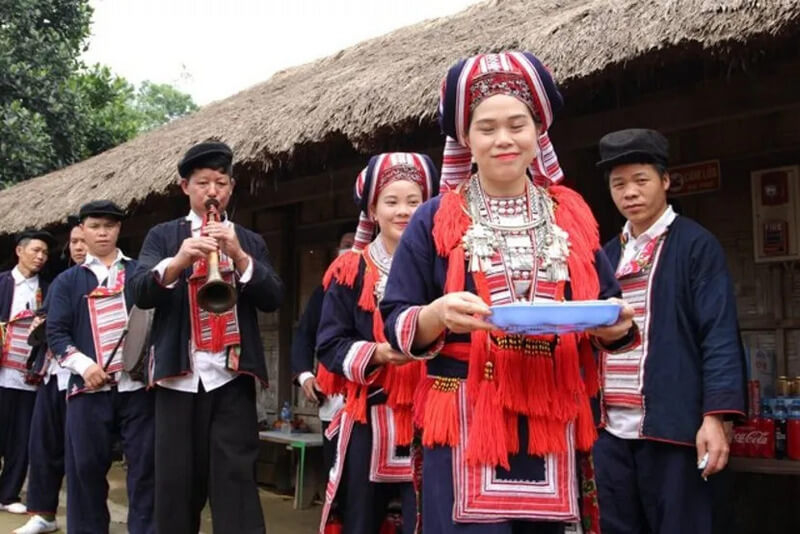
Dao women, especially Red Dao, are easily recognizable.
The highlight of traditional costumes of Dao people is the bright red headscarf decorated with tassels and silver coins. Their clothing is carefully hand-embroidered with intricate patterns and complemented by detailed silver jewelry.
These outfits reflect not only beauty but also craftsmanship and social status.
The Cap Sac ceremony is one of the most important rituals in a Dao man’s life.
It marks the transition into adulthood, recognizing that a man is ready to take on family and community responsibilities. The ceremony lasts several days and involves complex rituals guided by a shaman.
It is both a sacred milestone and a source of great pride.
Beyond the major groups, Ha Giang is also home to many other unique communities.
The Nung people share similarities with the Tay and are known for their indigo clothing.
However, they are especially famous for their metal forging skills. Tools such as knives and farming equipment made by the Nung are highly valued for their durability and sharpness.
The Giay people mainly live in valleys and focus on rice farming.
While their culture shares similarities with the Tay, they maintain distinct identities in language, clothing, and traditional folk songs.
The Lo Lo are one of the smaller minority groups in Ha Giang, yet they possess a valuable cultural heritage: bronze drums.
These drums are not only musical instruments but also sacred objects representing power and ancestral connection. Their patterns tell mythical stories about the origins of the Lo Lo people.
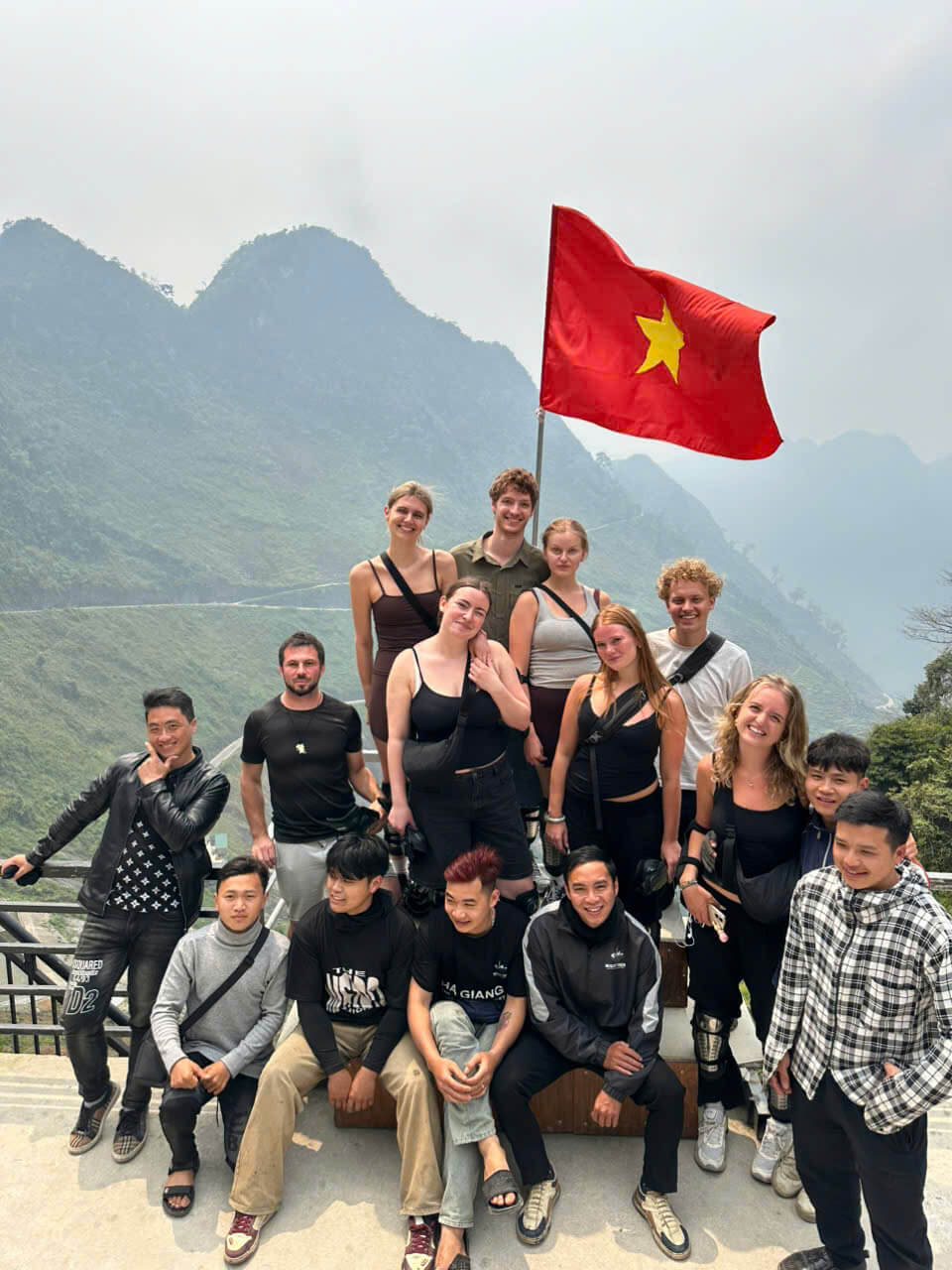
Many travelers come to Ha Giang with one goal in mind: to complete the famous loop. But after a few days on the road, most of them realize something deeper -the Ha Giang Loop is not just a route, it is a living cultural corridor.
The culture of the loop is not concentrated in one place. It is spread across the entire journey, woven into every village, every roadside stop, and every encounter along the way.
As you ride through mountain passes, you are not just moving through landscapes—you are moving through layers of Ha Giang ethnic culture. One moment, you might pass a H’Mong village perched on a rocky slope, where children run along dirt paths and women work with indigo-dyed fabric. A few kilometers later, the scenery shifts into lush valleys where Tay communities live in wooden stilt houses surrounded by rice fields.
Each curve of the road introduces a different rhythm of life.
What makes this journey unique is that culture here is not staged for tourism. It is raw, everyday, and continuous. Morning markets, farming activities, traditional houses, and even simple roadside meals all reflect authentic local life.
That is why the Ha Giang Loop is often described as more than a scenic ride. It is an immersive experience where culture reveals itself gradually, not through planned attractions, but through observation, patience, and presence.
If there is one place where Ha Giang ethnic culture comes alive most vividly, it is the highland markets.
These markets are not designed for tourists. They are part of a long-standing tradition where ethnic communities gather weekly or monthly to trade goods, meet relatives, and maintain social connections.
Markets such as Dong Van, Meo Vac, and Khau Vai each have their own identity, but they share a common atmosphere - lively, colorful, and deeply human.
Arriving at a market early in the morning, you will notice groups of people walking from distant villages, dressed in their finest traditional clothing. The colors are striking—bright reds, deep indigo blues, intricate embroidery, and silver jewelry reflecting the sunlight.
But what makes these markets special is not just the visual aspect.
It is the interaction.
People come not only to buy and sell, but also to talk, laugh, reconnect, and exchange stories. You will see elderly men sharing cups of corn wine, women bargaining over fabrics, and young people quietly observing each other - sometimes even beginning relationships that may lead to marriage.
In places like Khau Vai Love Market, this social aspect becomes even more meaningful, as it is tied to unique cultural traditions of reunion and emotional connection.
For travelers, visiting a market is not about shopping. It is about witnessing the pulse of community life, where culture is expressed naturally and without filters.
While markets offer a glimpse into community life, staying in a local village allows you to experience it from the inside.
Choosing a homestay in a Tay, H’Mong, or Dao village transforms your trip from observation into participation.
Instead of just passing through, you begin to understand daily routines:
Waking up to the sound of roosters and distant conversations
Sharing meals prepared with locally grown ingredients
Watching families cook over traditional stoves
Seeing how people balance tradition with modern life
Even simple moments - like sitting around a wooden table, drinking tea, or listening to stories told by the host - can become the most memorable parts of your journey.
With such diversity, Ha Giang is a multilingual region. Each ethnic group has its own language.
However, Vietnamese serves as the common language for communication. Most locals in tourist areas can speak basic Vietnamese. A friendly smile and a few simple phrases will help you connect easily..
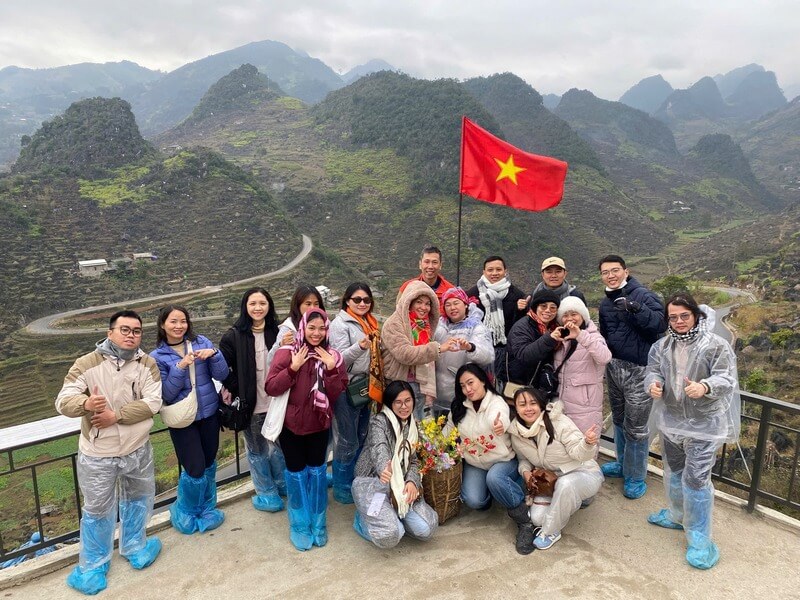
The beauty of Ha Giang ethnic culture lies in its authenticity - and that authenticity can only be preserved through responsible travel.
As tourism grows, the impact of visitors becomes more visible. That is why every traveler plays a role in protecting the cultural and social fabric of this region.
Here are some important principles to keep in mind:
Respect personal space and privacy
Always ask for permission before taking photos, especially of children and elderly people. Not everyone is comfortable being photographed, and respecting this builds trust.
Dress appropriately in local communities
When visiting villages or spiritual sites, modest clothing shows cultural awareness and respect for local customs.
Support local livelihoods
Instead of buying mass-produced souvenirs, choose handmade products directly from local artisans. This helps sustain traditional crafts and supports community income.
Avoid giving money to children
While it may seem like a kind gesture, it can unintentionally encourage dependency and affect long-term community development. Supporting families through purchases or community-based tourism is a better alternative.
Be mindful of your impact
Simple actions like reducing plastic waste, respecting local property, and following local guidance can help preserve the environment and culture.
Learn before you go
Understanding basic cultural norms, traditions, and values allows you to travel with awareness and appreciation.
Exploring Ha Giang ethnic culture is not something you simply “see” - it’s something you gradually understand through small, meaningful moments. From traditional markets in the highlands to the quiet rhythm of daily life in remote villages, every encounter reveals a deeper layer of Northern Vietnam.
But without local insight, it’s easy to only scratch the surface.
That’s why traveling with a knowledgeable team makes all the difference. With Mikey Ha Giang, you’re guided by locals who not only know the routes, but also the stories, customs, and people behind them. It turns a scenic trip into a cultural journey - one that feels personal, respectful, and genuinely memorable.
If you’re looking to go beyond landscapes and truly connect with the spirit of the region, experiencing Ha Giang ethnic culture with the right guide is where your journey begins.