
SAPO: Hành trình khám phá Cao Bằng không chỉ là chinh phục những cung đường đèo hùng vĩ hay chiêm ngưỡng vẻ đẹp của thác Bản Giốc. Đó còn là một cuộc phiêu lưu ẩm thực đầy màu sắc, nơi mỗi món ăn đều kể một câu chuyện về văn hóa và con người. Nếu bạn đang tìm kiếm câu trả lời cho câu hỏi where to eat in Cao Bang, cẩm nang này được tạo ra để dành cho bạn. Chúng tôi sẽ cùng bạn điểm qua những đặc sản không thể bỏ lỡ và gợi ý các địa chỉ uy tín để bạn có một trải nghiệm ẩm thực trọn vẹn tại vùng đất địa đầu Tổ quốc.
Cao Bang cuisine bears the distinctive character of the mountains and forests, as well as the cultural traditions of the Tay and Nung ethnic communities. The food here has its own unique flavors, often featuring local spices and ingredients that are difficult to find elsewhere. To begin your culinary journey, let’s explore some of the dishes that have made this region famous.
Signature Dishes of Cao Bang Cuisine
This is one of the most famous dishes on the list of Cao Bang specialties. The name “7-flavor” comes from the seven spices used to marinate the inside of the duck, including secret ingredients traditionally used by the Tay people.
The duck is roasted over hot charcoal in an oven until the skin turns a glossy honey-brown and becomes wonderfully crispy. Inside, the meat remains tender, naturally sweet, and deeply infused with the aroma of mountain spices. The dish is usually served with a dipping sauce made from the flavorful juices and fat released during roasting, creating a taste that is difficult to forget.
Unlike the hot steamed rice rolls commonly found in many other parts of Vietnam, Cao Bang-style bánh cuốn, also known as bánh cuốn nguội, is made with thin rice sheets without filling and served after cooling.
The highlight of the dish is the bowl of broth simmered from bones. The broth is clear and delicately sweet, with a little minced meat and fragrant fried shallots added for extra flavor. To eat it, simply dip each soft piece of rice roll into the warm broth and enjoy the subtle combination of the rich sweetness of the stock and the light taste of the rice sheets.
Cao Bang sour pho is a distinctive mixed noodle dish that is especially enjoyable during the summer months. A generous bowl typically includes fresh rice noodles, crispy-skinned roasted pork, pork liver, stomach, crispy fried sweet potato, roasted peanuts, and fresh herbs.
The soul of the dish is its carefully prepared sweet-and-sour sauce, made with vinegar, sugar, and other seasonings. When served, simply mix all the ingredients together to experience the full combination of textures and flavors.
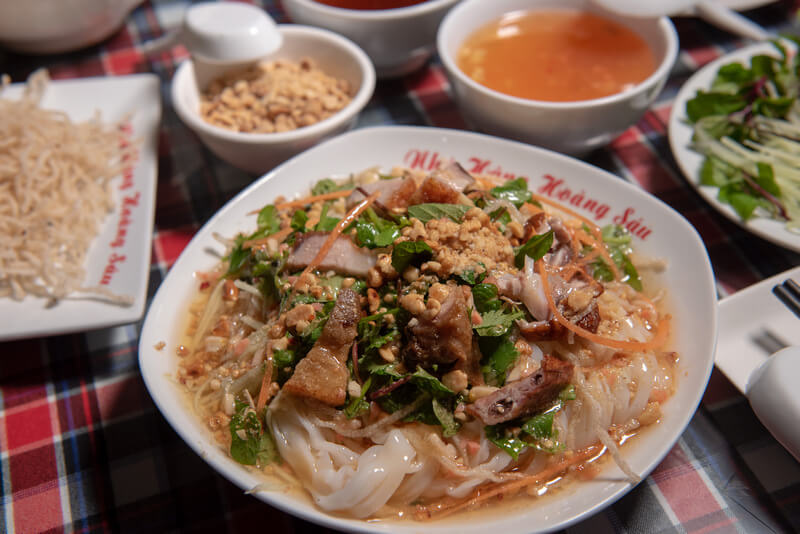
Phở Chua (Sour Pho)
When the weather turns chilly, people in Cao Bang often seek out freshly fried bánh áp chao. The outer layer is made from a mixture of glutinous rice flour and regular rice flour, while the filling consists of seasoned duck meat.
The cakes are deep-fried in a large pan of oil until golden and crispy. When you bite into one, you will first notice the crunchy exterior, followed by the soft, slightly chewy dough and savory duck filling. Bánh áp chao is usually served with sweet-and-sour fish sauce and shredded papaya.
Xôi trám is a rustic dish that captures the distinctive flavors of Cao Bang’s mountainous landscape. Black canarium, a fruit commonly found in the northern highlands, is first gently cooked to remove its natural astringency.
The flesh of the fruit is then mixed with glutinous rice and steamed together. The finished sticky rice has an attractive light-purple color, with the fragrance of glutinous rice blending beautifully with the rich, nutty taste of black canarium. It is a simple yet memorable local culinary experience.
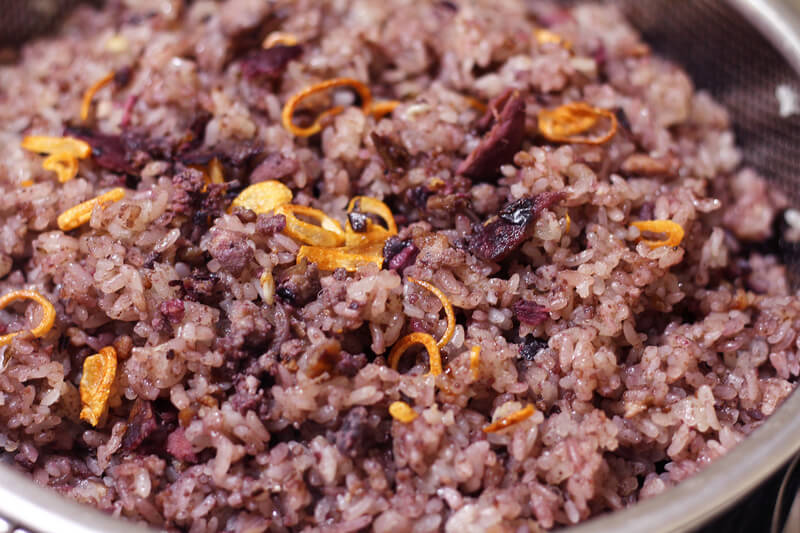
Xôi Trám (Black Canarium Sticky Rice)
Smoked sausage is one of the Cao Bang specialties that many travelers choose to buy as a gift. It is made from pork shoulder seasoned with mountain ginger, mắc mật fruit, and other local spices.
What makes this sausage distinctive is the smoking process. It is hung above the kitchen stove and slowly dried in wood smoke for several days. This gives the sausage its characteristic smoky aroma and also allows it to be preserved for a longer period.
Once you know what you would like to try, the next question is naturally where to eat. Cao Bang City offers a variety of options, ranging from long-established local eateries to restaurants serving a wider selection of dishes. Below are several suggestions compiled from the experiences of many travelers.
Recommended Eateries & Restaurants in Cao Bang
To try the famous 7-flavor roasted duck, you can visit restaurants that specialize in this dish. Several commonly mentioned places are located along Pho Cu Street or around the central market area. These eateries generally have a simple local atmosphere and can become quite busy during peak dining hours.
Duc Thong Roasted Duck: Pho Cu Street, Hop Giang Ward, Cao Bang City.
Minh Tom Roasted Duck: 1/4 Street, Song Bang Ward, Cao Bang City.
Bánh cuốn nguội and sour pho are popular choices for breakfast or lunch. You can easily find them at small local eateries or inside the city’s market areas.
Co Hai Bánh Cuốn: Hoang Van Thu Street, Hop Giang Ward, Cao Bang City.
The eateries along Vuon Cam Street also offer several options for trying Cao Bang-style sour pho.
Bánh áp chao is commonly sold in the afternoon and evening, particularly during winter. It is a typical example of Cao Bang street food. Try wandering through the smaller streets or around Son Loc Lake, where you may come across vendors serving these freshly fried cakes.
Dung Lien Bánh Áp Chao: Pac Bo Street, Song Bang Ward, Cao Bang City.
Street food stalls along Ly Tu Trong Street in the late afternoon and evening.
If you would like to sample several specialties in a single meal, restaurants with broader menus are a suitable choice. Many of the best restaurants in Cao Bang offer a diverse selection ranging from wild mountain vegetables and locally raised pork to smoked sausage and Gam River fish.
Ngon Restaurant: Kim Dong Street, Hop Giang Ward, Cao Bang City.
La-gu Quan: 118 Pho Cu Street, Hop Giang Ward, Cao Bang City.
Ban Gioc Waterfall is located in Trung Khanh District, approximately 80 km from Cao Bang City. Dining options in this area are somewhat more limited, but there are still enough choices for travelers who want to experience local cuisine. Planning ahead will make it easier to enjoy a satisfying meal during your visit.
Dining Options Near Ban Gioc Waterfall
Trung Khanh Town is the district center and has a number of eateries serving both local residents and visitors. Here, you can find regional specialties such as Quay Son River fish, Trung Khanh chestnuts when in season, and other traditional dishes.
Restaurants in the area are generally simple in style, but the quality of the food is relatively consistent.
Finding a place to eat around the waterfall can be slightly more challenging. Keep these tips in mind:
Eat in Trung Khanh Town: For a wider selection and more reasonable prices, consider having your meal in Trung Khanh Town before or after visiting the waterfall.
Check the menu and prices: Restaurants located immediately around the waterfall mainly serve tourists. Ask about prices before ordering to avoid unexpected costs.
Try regional specialties: Don’t hesitate to ask restaurant owners about specialties from the Trung Khanh area, such as grilled fish or wild mountain vegetables.
To gain a deeper understanding of a Cao Bang food guide, you should explore beyond restaurants and immerse yourself in the everyday culinary rhythm of local life. From bustling markets to quiet cafés, each place offers a different perspective on the region.
A Glimpse into Cao Bang's Food Scene
Cho Xanh, Cao Bang’s central market, is one of the hearts of the city. Here, you can find many dried local specialties, including smoked sausage, dried bamboo shoots, and shiitake mushrooms.
The food section inside the market also serves a variety of affordable everyday dishes. Walking through the market early in the morning is one of the best ways to experience the daily atmosphere and routines of local residents.
After exploring Cao Bang’s cuisine, stopping at a local café is a pleasant way to slow down. Cafés in Cao Bang generally have simple, relaxed spaces where local residents gather to meet and talk.
It is also a good opportunity to rest, observe everyday life around you, and plan the next stage of your journey.
Food costs in Cao Bang are generally quite reasonable. A meal at a casual local eatery or street food stall can cost around 30,000 - 70,000 VND per person.
A more substantial meal at a restaurant featuring several regional specialties may cost approximately 150,000 - 300,000 VND per person. Prices can vary depending on the restaurant, location, and dishes you choose.
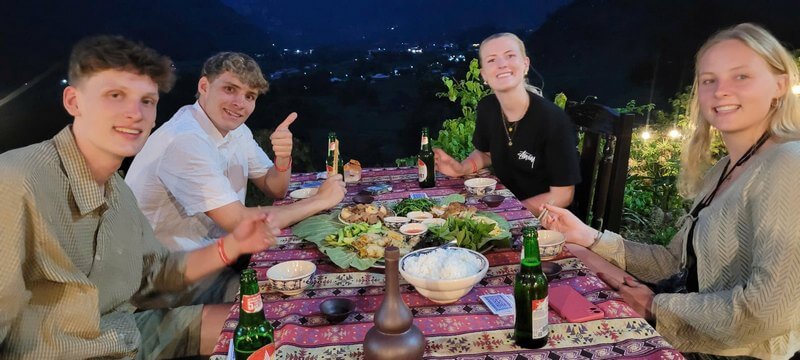
Knowing where to eat in Cao Bang is about more than finding a good restaurant. Some of the best experiences come from sitting in a modest local eatery, tasting a regional specialty for the first time, or sharing a home-cooked meal at a homestay after a long day exploring the mountains.
When traveling with Mikey Ha Giang, the journey goes beyond famous attractions such as Ban Gioc Waterfall, Nguom Ngao Cave, and Angel Eye Mountain. Our tours also give you opportunities to discover local cuisine and experience Cao Bang through the places, flavors, and communities that give this region its character.
Let Mikey Ha Giang take care of the route and travel details, so you can spend more time enjoying the landscapes, meeting local people, and discovering the authentic flavors of Cao Bang along the way.