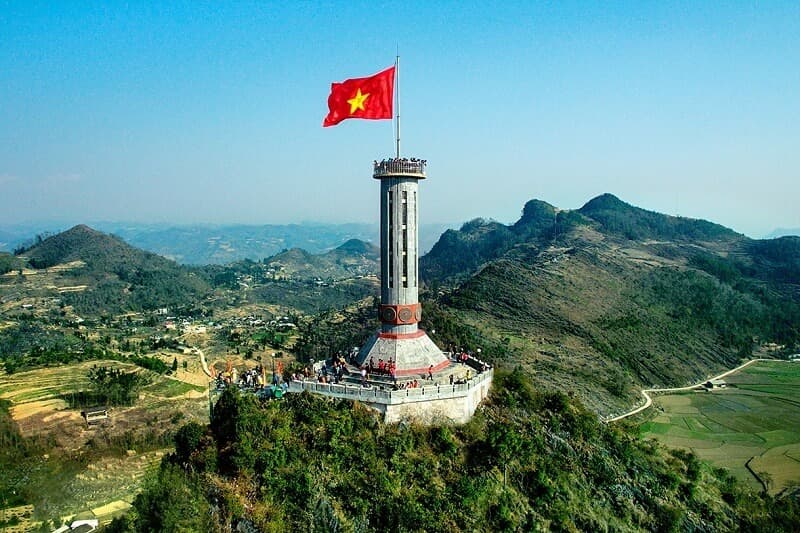
When travelers talk about Ha Giang, one landmark always stands out, Lung Cu Flag Tower, a national symbol marking Vietnam’s far northern edge. More than a tourist viewpoint, it represents identity, history, and pride. In this guide, we’ll take you through its story, scenic highlights, cultural surroundings, and the best tips to fully experience this meaningful destination.
For many Vietnamese, the Lung Cu Flag Tower is not just stone and steel. It is a guardian of the frontier, a reminder of sovereignty, and an emblem cherished by generations. To truly appreciate the site, let’s begin with where it stands and why it carries such deep significance.
The tower rises from the peak of Dragon Mountain - also known as Long Son - at roughly 1,470 meters above sea level. Administratively, it belongs to Lung Cu Commune, Dong Van District, Ha Giang Province. Although symbolic, it is widely recognized as the northernmost point of Vietnam.
The tower sits within the Dong Van Karst Plateau UNESCO Global Geopark, surrounded by dramatic cliffs and endless mountain layers. From the summit, you can see deep valleys, rugged limestone peaks, and villages scattered across the highlands. Few viewpoints in Vietnam offer such a breathtaking panorama.
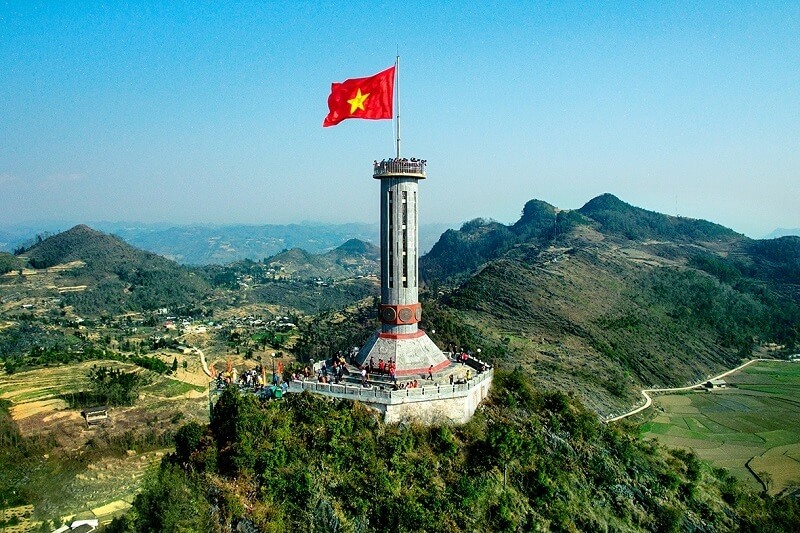
Lung Cu Flag Tower
The story of Lung Cu Flag Tower stretches back centuries. During the Ly Dynasty, a wooden flagpole made from cypress was placed here to mark the country’s boundary. Over time, the tower underwent several restorations until the modern structure we see today was inaugurated in 2010.
Its symbolism is powerful:
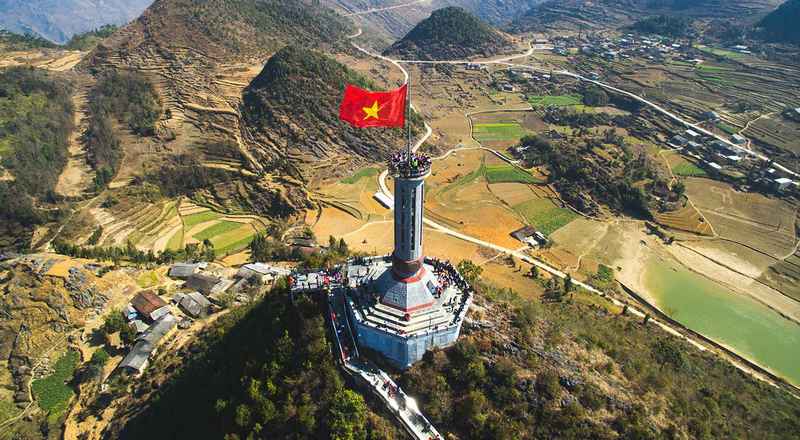
History and Significance of the Lung Cu Flag Tower
Visiting Lung Cu is more than simply climbing stairs. It’s a collection of memorable moments shaped by scenery, culture, and the humbling presence of Vietnam’s northern heights.
To reach the summit, you’ll climb 389 outdoor stone steps, followed by 140 spiral steps inside the tower. Once at the top, a spectacular 360-degree view unfolds.
From the peak of Lung Cu Flag Tower, you’ll see terraced fields flowing across the mountainside, two clear lakes often called the “dragon’s eyes,” and the distant Vietnam–China border. Standing beneath the massive flag, breathing crisp mountain air, and watching the landscape stretch endlessly feels both peaceful and profoundly symbolic.
At the foot of Dragon Mountain lies Lo Lo Chai Village, home to the Lo Lo people - one of Vietnam’s smallest ethnic communities. The village charms visitors with its earthen-walled houses, yin-yang tiled roofs, and vibrant traditions.
A stop here offers simple but meaningful experiences:
Lo Lo Chai adds soul to the Lung Cu journey, a reminder that the region’s strength lies not only in scenery but also in culture.
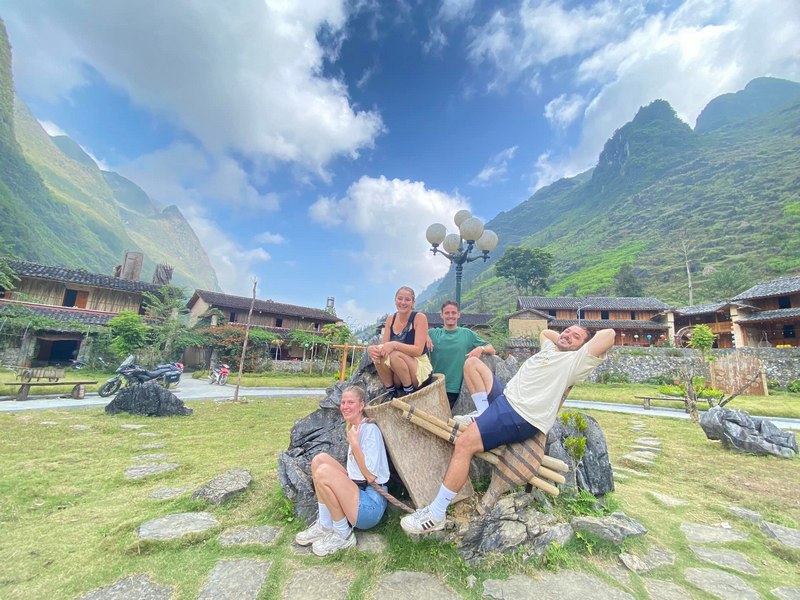
Experience Local Life in Lo Lo Chai Village
If your visit coincides with market day, set aside time to wander through Lung Cu Market. Markets here operate as cultural gatherings rather than simple trading grounds. H’Mong, Lo Lo, Tay, and Nung communities meet to exchange goods, share meals, and connect socially.
Expect to find here:
It’s one of the most colorful ways to explore ethnic identity in the far north.
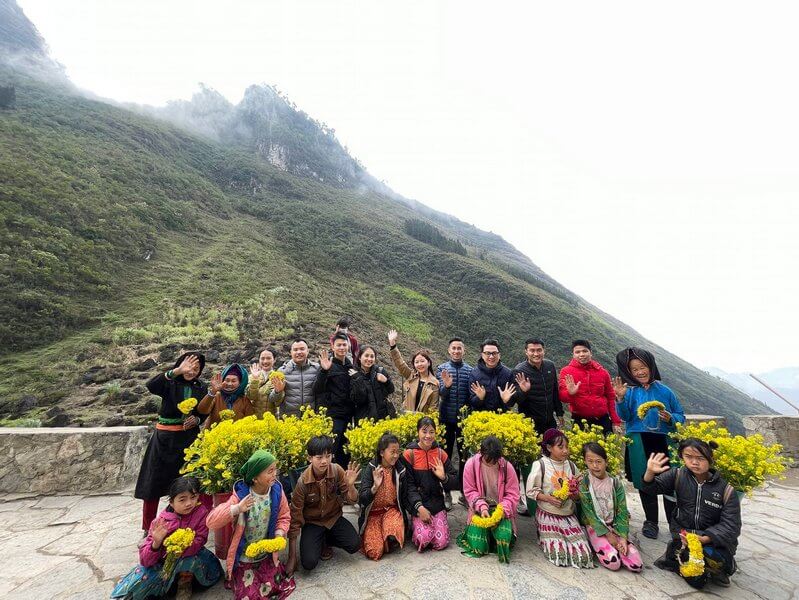
Shopping at Lung Cu Local Market
Lung Cu is beautiful year-round, but each season offers a different mood:
A few quick pointers will make your visit smoother:
Lung Cu is a highlight of the legendary Ha Giang Loop. Below is a recommended 3-day 2-night itinerary by Mikey Ha Giang for an immersive journey - a practical answer to travelers asking how to get to Lung Cu.
Your journey begins in Ha Giang City, gradually entering higher altitudes and stunning scenery.
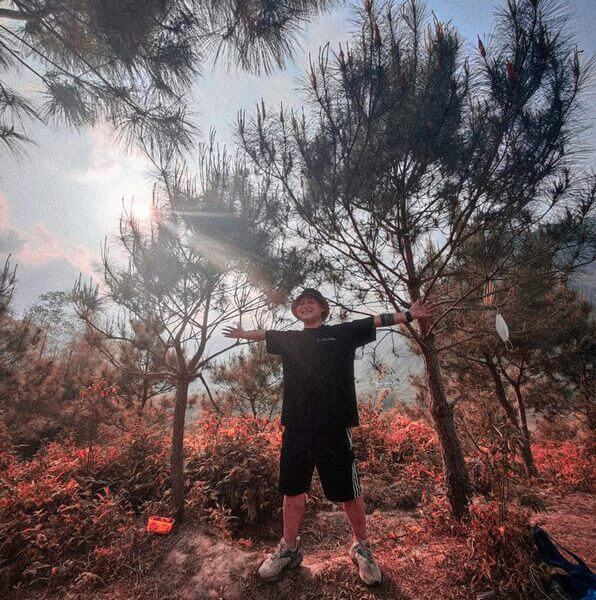
Yen Minh Pine Forest
This is the signature day - the moment you reach Lung Cu Flag Tower.
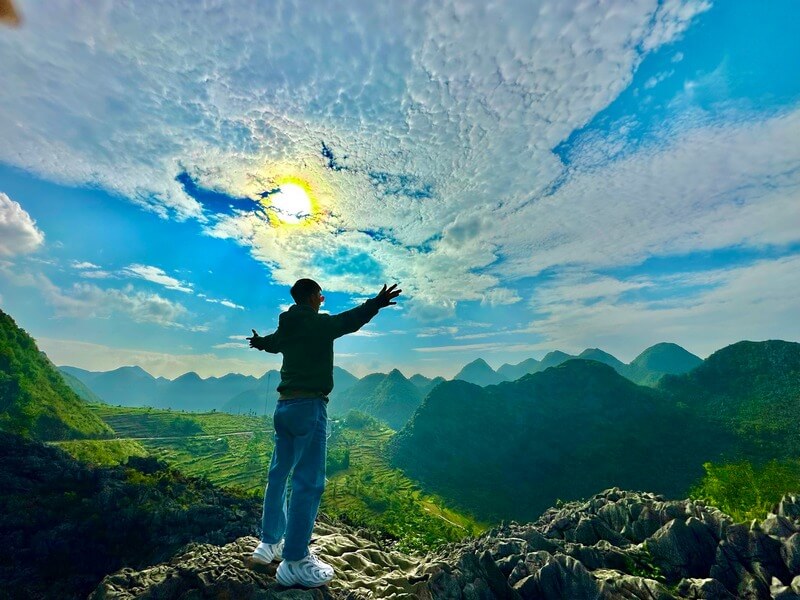
Sky Walk on Ma Pi Leng Pass
Your final day passes through some of the most spectacular scenery in Vietnam.
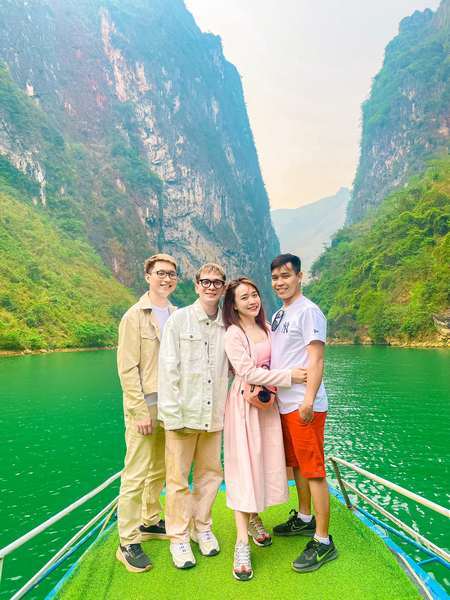
Nho Que River Boat Tour
Lung Cu Flag Tower is more than a geographical point - it’s a journey into history, identity, and the enduring spirit of the Vietnamese people. Standing atop Dragon Mountain, watching the national flag ripple against a backdrop of mountains and sky, you’ll feel a connection to the land that words can hardly capture.